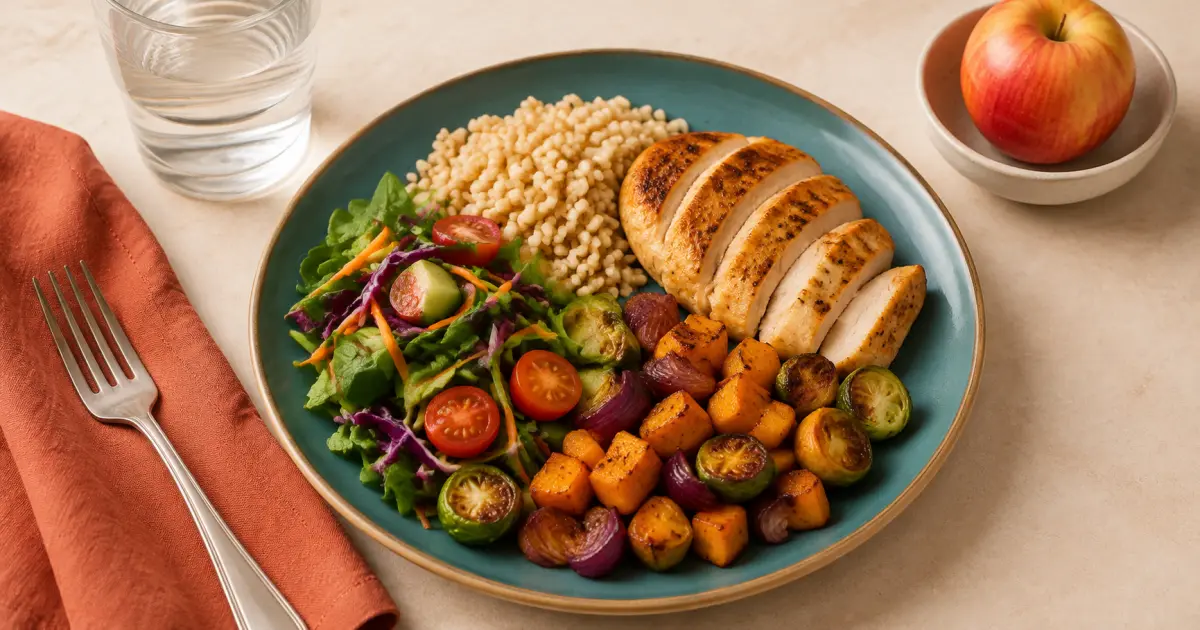
Use four questions: Where is the protein? Which fruit or vegetable adds variety? What food supplies useful energy for this meal? What sauce, fat or seasoning makes it enjoyable? Assemble those parts in portions that fit your appetite, then review the whole day rather than requiring every plate to hit an exact macro ratio. Medical needs, pregnancy and sports-performance goals may require individualized guidance.
A balanced meal is a useful combination, not a perfect diagram
Balanced describes the roles foods play together. Protein foods provide amino acids and other nutrients. Grains, fruit, starchy vegetables, beans and dairy can contribute carbohydrate and energy. Vegetables and fruit add variety, fiber and micronutrients. Fats contribute energy, essential fatty acids, flavor and texture. Many foods fill more than one role.
That overlap is helpful. Beans provide protein and carbohydrate; yogurt can provide protein, carbohydrate and fat; nuts provide fat, protein and other nutrients. A mixed dish may combine every part before it reaches the plate. You do not need four separate piles or a mathematically exact division for the meal to be thoughtful.
The current Dietary Guidelines for Americans emphasize whole, healthy and nutritious foods, variety across food groups and protein foods at meals. They also provide serving patterns by overall calorie level rather than declaring one portion suitable for everyone. Treat visual meal templates as planning aids, then adapt them to the person and situation.
Swipe to see the full table
| Meal job | Examples | Useful question |
|---|---|---|
| Protein source | Eggs, fish, poultry, meat, yogurt, beans, lentils, tofu | Is there a meaningful source in this meal? |
| Produce and variety | Vegetables, fruit, herbs, mixed plant foods | What color, texture or nutrient variety can I add? |
| Energy-providing base | Grains, bread, potatoes, fruit, beans, dairy | What amount fits the meal and activity ahead? |
| Fat, sauce and flavor | Oil, nuts, seeds, avocado, dressing, cheese, sauce | What makes this satisfying, and is the amount visible? |
| Fluid | Water or another chosen drink | Does the drink also add energy or nutrients to log? |
Related: Use calories and macros without reducing a meal to numbers
Start with the meal's purpose and your real context
Breakfast before a long commute, lunch after training and a quiet evening meal do not need identical portions. Ask what the meal needs to do: bridge a short gap, support a demanding afternoon, use available leftovers, meet a clinician-directed plan or simply provide an enjoyable dinner with other people. Context prevents a template from becoming a rigid rule.
Use appetite as information too. A small meal may need a planned snack later, while a larger mixed meal may carry you longer. Hunger and fullness are not perfectly predictable from calorie or macro totals. Notice your response without assuming that one food or number explains it with certainty.
Budget, cooking facilities, culture, allergies and time shape what is practical. Frozen vegetables, canned beans, packaged grains and leftovers can all support a varied meal. Balance does not require expensive specialty ingredients or an elaborate recipe. A repeatable combination you enjoy is more useful than an idealized plate you will not make.
Choose a protein food, then build around it
Starting with a protein source can make meal planning easier because it narrows the options. Eggs with toast, yogurt with oats, lentils with rice, tofu with noodles, fish with potatoes and chicken with a grain bowl all create different starting points. Varying sources also varies the nutrients, flavors and cooking methods across the week.
A food does not need to be pure protein to count. Beans, lentils, yogurt, milk, nuts, seeds and whole grains contribute mixtures of macros. Look at the full portion and label when relevant rather than relying on a food's reputation. A spoonful of peanut butter and a serving of lentils are both called protein foods in conversation, yet they contribute different amounts and combinations.
There is no single protein gram target that belongs in every breakfast or dinner. Needs vary with body size, age, pregnancy, health and training. If a medical or performance goal makes protein quantity important, a registered dietitian or other qualified professional can individualize it. For general meal planning, begin by making the source visible and consistent enough to review.
Beans can provide protein, carbohydrate and fiber. Yogurt can provide protein, carbohydrate and fat. A flexible meal framework should recognize the whole food, not force it into one box.
Add produce and enough energy for the occasion
Vegetables and fruit can add water, fiber, color, acidity, sweetness and texture. Fresh is not the only useful form: frozen, canned and cooked options can be convenient and nutritious. Match the form to the meal. Berries may work in breakfast oats, frozen vegetables in a stir-fry, canned tomatoes in beans and a piece of fruit beside a sandwich.
Then include an energy-providing food in an amount that fits the occasion. Rice, pasta, bread, oats, potatoes, tortillas, fruit, beans and dairy are common choices. Carbohydrate is not automatically an optional garnish; it is one of the body's energy sources, and the practical amount varies with the person and activity. Some protein foods and produce already contribute it.
Meal balance is best judged across time. A vegetable-light airport breakfast can be followed by produce later. A celebration dinner may be richer than a weekday lunch. Look for an overall pattern of variety and adequacy instead of trying to repair every plate until it resembles a diagram.
- Use a fruit or vegetable that genuinely fits the dish.
- Choose fresh, frozen, canned or cooked forms according to access and preference.
- Include enough energy for the meal's purpose rather than copying someone else's portion.
- Let mixed foods fill more than one role.
- Review variety across days, not only one photograph.
Make flavor visible instead of pretending it does not count
Oil, dressing, cheese, nuts, seeds, avocado, butter and sauces can make a meal enjoyable and contribute important nutrients. They also add energy, often in a smaller volume than the rest of the plate. A balanced meal does not require removing them; a useful food log simply represents the amount honestly.
Flavor also comes from herbs, spices, acids, aromatics and cooking technique. A tomato-lentil bowl can use lemon and herbs, a stir-fry can use ginger and a measured sauce, and roasted vegetables can use oil plus strong seasoning. Planning flavor makes a simple combination feel like a meal rather than a checklist.
Photos frequently miss cooking fats and ingredients blended into sauces. If you prepared the food, use the recipe. If a restaurant publishes nutrition information, match it to the item and customization. Otherwise, add the known sauce or fat as a reviewed estimate. The goal is neither omission nor false precision.
Use adaptable meal templates when ideas run out
A template reduces decision fatigue while leaving room for culture and preference. Start with a structure, swap one component and keep the roles intact. A bowl can combine a protein, grain or starchy base, vegetables and sauce. A snack-style plate can combine yogurt or hummus, fruit or vegetables, bread or crackers and nuts or another topping.
The same template can produce very different meals. Lentils, rice, roasted vegetables and yogurt become one version; salmon, potatoes, greens and a lemon dressing become another. For breakfast, oats with yogurt, berries and seeds uses overlapping ingredients, while eggs, toast, tomatoes and fruit separates them visibly.
These examples are prompts, not prescribed menus. Adjust for dietary pattern, allergies, cost and availability. When a meal needs to travel, prioritize safe storage and components that hold well. When food access is limited, use the combination available and avoid turning an imperfect day into a judgment about yourself.
Swipe to see the full table
| Template | Protein example | Produce example | Energy and flavor example |
|---|---|---|---|
| Breakfast bowl | Yogurt or soy yogurt | Berries or banana | Oats plus seeds or nut butter |
| Grain bowl | Beans, tofu, chicken or fish | Roasted or raw vegetables | Rice or quinoa plus dressing |
| Sandwich plate | Egg, tuna, hummus or sliced protein | Salad, tomato or fruit | Bread plus spread or cheese |
| Stir-fry | Tofu, shrimp, chicken or edamame | Mixed vegetables | Noodles or rice plus cooking oil and sauce |
| Soup meal | Lentils, beans, meat or yogurt side | Vegetables in the soup | Potato, grain or bread plus chosen topping |
Review a meal without grading it
After eating, ask what worked. Was the meal practical to prepare? Did it taste satisfying? Did the portion fit the occasion? Was an important component missing because the plan was unrealistic, or was the meal simply different from your usual pattern? Those questions produce usable feedback without labeling the plate good or bad.
Numbers can support the review when they answer a specific question. A macro view might show that a recurring lunch has little protein, while the photo reveals that the vegetables and grain dominate the bowl. A calorie estimate might identify that several small additions contribute more than expected. Neither result tells you what you must change; it clarifies the tradeoff.
If food tracking creates guilt, fear, compensatory exercise, secrecy or increasingly rigid rules, stop and seek support. People with an eating-disorder history may need a different approach or no calorie tracking. A meal-planning tool should make decisions clearer, not make eating feel unsafe.
Use BiteLume to see the meal and the day together
Photograph the complete meal in BiteLume before eating and review the identified foods, portions, calories and macros. Compare the estimate with any label, recipe or preparation detail you know, and make sure your final record reflects the sauce, cooking fat, drink, second serving or meaningful leftover. The photo preserves the actual plate while the app creates an estimated calorie and macro view.
BiteLume's photo-derived nutrition values are estimates, not a verdict on balance or a medical assessment. Use labels, recipes and known quantities when they provide stronger evidence. Then return to the image: does the meal show the protein source, produce, energy-providing food and flavor you intended? The visible context often explains the numbers better than a daily total alone.
Review several meals across the week. Perhaps breakfast lacks variety, weekday lunches repeat a reliable combination, or dinner portions change with training days. Choose one practical experiment—add fruit to two breakfasts, prepare a protein component for work lunches or measure a frequently used dressing once. Small, observable changes are easier to evaluate than rebuilding the whole diet at once.
Questions people also ask
What makes a meal balanced?
A practical balanced meal combines food roles such as protein, produce, useful energy and enough fat or flavor to be satisfying. The foods can overlap, and the portions vary by person and context.
Does every meal need vegetables, protein, carbs and fat?
Not as four separate items or in one exact ratio. Mixed foods fill several roles, and balance can be considered across the day. Use the framework as a prompt, not a rigid rule.
Can I build a balanced meal without counting macros?
Yes. Choose a visible protein source, include fruit or vegetables, add an energy-providing food and plan flavor. Macro estimates are optional context when they help answer a specific question.
Can a meal photo tell me whether my meal is balanced?
A photo can preserve visible variety and portions, but it cannot reveal every ingredient, nutrient or personal need. Use it with labels, recipe knowledge, your goals and qualified guidance when needed.
- Use calories and macros without reducing a meal to numbers
- Understand calorie density and portion size
- Track protein for a specific training goal
- Review a meal's estimated macros from a photo
- Create and review a meal estimate from an iPhone photo
- Turn the balanced-meal framework into practical breakfasts
- Adapt the same food roles to portable snacks
- Read packaged serving and nutrient information in context
Make the next meal easier to track.
Use a photo to get a calorie and macro starting point, review the details, and keep your progress in one place.