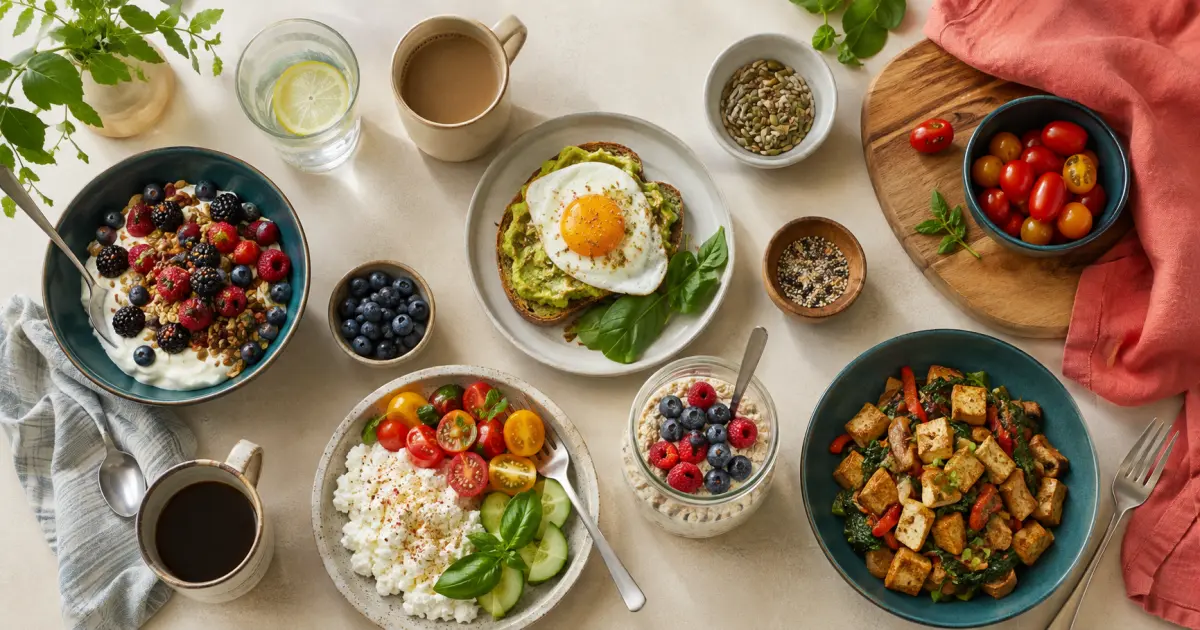
Choose one visible protein anchor, one or more supporting foods and a portion you can repeat. Good starting templates include yogurt bowls, eggs with toast, tofu scrambles, cottage cheese with fruit, overnight oats made with dairy or soy, bean-and-egg wraps, smoked-fish plates, breakfast leftovers and ingredient-based smoothies. There is no single high-protein threshold or breakfast target that suits everyone. Use package labels or USDA data for the exact foods, then review the complete meal photo in BiteLume.
- USDA MyPlate — Protein Foods Group
- Dietary Guidelines for Americans, 2025–2030
- U.S. Food and Drug Administration — How to Understand and Use the Nutrition Facts Label
- U.S. Food and Drug Administration — Food Labeling Guide
- USDA FoodData Central — Food Search
- National Academies — Dietary Reference Intakes Reference Tables
Define high protein for the breakfast you are actually planning
There is no universal meal-level threshold for a high-protein breakfast. Regulated package claims have defined criteria, but an entire meal still needs to be evaluated from its foods and portions. Individual protein needs vary with body size, age, activity, training, health and the rest of the day's eating pattern, so a search result cannot set a personal target from one breakfast alone.
Instead, compare a breakfast with your own reason for choosing it. Are you trying to make a normally carbohydrate-only breakfast more balanced, meet a plan from a dietitian, or make a grab-and-go meal more substantial? A defined job helps you choose the food and portion without chasing the largest number on the shelf.
U.S. Nutrition Facts labels list protein in grams, although a percent Daily Value is not required for most foods unless specific conditions apply. Use the gram amount for the labeled serving, then adjust it to the portion you eat. For unpackaged food, choose a well-matched USDA FoodData Central record.
If you have kidney disease, are pregnant, are recovering from illness, train at a high level or need a therapeutic diet, ask a qualified professional about an appropriate protein amount and distribution.
Related: Track protein for a resistance-training goal without fixating on one number
Build breakfast around a protein anchor
A protein anchor is simply the ingredient that supplies most of the meal's protein. Making it visible simplifies both preparation and photo review. Eggs, dairy foods, fortified soy products, beans, lentils, tofu, tempeh, nuts, seeds, fish, poultry and meat can all play that role, depending on preference and dietary pattern.
Next, add foods that make the meal complete for you: fruit or vegetables, a grain or starchy food, and a source of fat or flavor where desired. These additions are not background decoration. They contribute calories and nutrients and belong in the log, especially granola, nut butter, cooking oil, cheese, spreads and sweeteners.
Finally, choose a portion you can describe. One tub, two eggs, half a block or one scoop is only useful when its actual weight or label serving is known. A photo helps preserve the meal, but labels and measured recipe ingredients remain stronger evidence for hidden composition.
- Choose the protein anchor that fits your preferences.
- Add produce, grain or other supporting foods as desired.
- Include cooking fat, toppings, spreads and drinks.
- Check the product label or a matching USDA record.
- Photograph and review the complete breakfast before saving.
12 high-protein breakfast templates
Use these as structures rather than fixed recipes. Protein and calorie totals can differ substantially by brand, portion, preparation and substitutions. Verify the ingredients you use instead of copying a number attached to a similar-looking meal online.
Variety matters more than forcing one favorite into every morning. Rotate dairy, eggs, legumes, soy, fish and other protein foods when they fit your diet. The current Dietary Guidelines emphasize nutrient-dense foods and variety; no single breakfast needs to carry the entire day's nutrition.
Swipe to see the full table
| Breakfast template | Protein anchor | Details to verify |
|---|---|---|
| Yogurt bowl with berries | Plain Greek-style or high-protein yogurt | Tub size, granola, seeds and sweetener |
| Eggs, toast and fruit | Eggs or egg-and-white mixture | Egg count, cooking fat, bread and spread |
| Cottage cheese bowl | Cottage cheese | Cup portion, fruit, nuts and honey |
| Tofu scramble | Firm tofu | Block portion, oil, sauce and side bread |
| Overnight oats | Milk or fortified soy drink plus yogurt | Oats, liquid, seeds and nut butter |
| Bean-and-egg wrap | Beans and egg | Tortilla size, cheese, oil and sauce |
| Smoked-fish breakfast plate | Salmon or other fish | Fish portion, bread, spread and sodium context |
| Savory lentil bowl | Lentils with egg or tofu | Cooked portion, oil and toppings |
| Breakfast sandwich | Egg with cheese, fish, poultry or tofu | Bread, spread, cheese and restaurant recipe |
| Ingredient-based smoothie | Yogurt, milk, soy or labeled protein powder | Every add-in and finished yield |
| Leftover dinner bowl | Previously cooked protein food | Recipe portion, reheating fat and additions |
| Nut-and-seed oatmeal | Milk or soy plus nuts and seeds | Dry oats, nut portions, liquid and sweetener |
Related: Review protein, carbohydrates and fat from a meal photo
Read breakfast labels in the right order
For yogurt, cereal, bread, milk, meat alternatives and protein powders, begin with serving size and servings per container. Compare that reference with the amount in your bowl, sandwich or blender. A package labeled high protein can still contain more or less than another product depending on the serving used.
Read the full label rather than optimizing one line. Calories, protein, carbohydrate, fat, fiber, added sugars, saturated fat and sodium each answer different questions. Which details matter depends on your needs; protein is not a score that cancels everything else in the meal.
When you combine products, calculate each actual portion once. Do not add a product's protein Daily Value to its grams, and do not add macro-derived calories on top of the declared calories. For a recurring combination, keep a recipe record that clearly states what one portion represents.
Make the breakfast easier to interpret from a photo
Keep foods separated enough that the main components remain visible. A yogurt bowl photographed before granola and nut butter are stirred in provides more clues than a uniform beige mixture. For a sandwich, a second angle or brief note can preserve the filling.
Include the complete eating occasion. Coffee additions, juice, cooking oil, butter, sauces and second servings can alter the total even when the protein anchor is logged correctly. If breakfast comes from a package, keep the label nearby and compare the generic visual estimate with the product-specific data.
Mixed breakfasts require more context. A smoothie may hide every ingredient, while an omelet may hide cheese, meat and cooking fat. A photo documents appearance; a recipe or short ingredient note documents what the camera cannot see.
- Show the full plate, bowl and calorie-containing drink.
- Keep toppings visible before mixing when practical.
- Add one note for hidden fillings, oil or ingredient amounts.
- Photograph a package label when the exact product matters.
- Account for leftovers or seconds when reviewing the result.
Prep components without locking every morning into one meal
Prepare a few components rather than ten identical breakfasts. Cook eggs or tofu safely, portion yogurt, wash fruit, mix dry oat jars or freeze smoothie ingredients. Keep toppings separate so the final amount remains visible and texture holds up.
Name repeatable recipe notes specifically: yogurt bowl with measured granola is better than healthy breakfast. Recalculate the meal when you change the yogurt, double the nut butter, switch the milk or use a larger bowl. Repetition reduces work only when the underlying recipe remains similar.
Food safety still matters. Refrigerate perishable ingredients promptly and follow official storage guidance. If prepared food has been held at an unsafe temperature, do not eat it merely to preserve a meal plan or avoid changing the record.
Use BiteLume to compare real breakfasts, not idealized templates
In BiteLume, photograph the complete breakfast and review the foods, portions and estimated protein, carbohydrate, fat and calories. Compare packaged items with their labels, and use recipes or ingredient notes to judge mixed dishes and hidden ingredients. Use the estimate as a starting point, not a laboratory measurement.
After several breakfasts, look for the pattern that answers your question. Perhaps the protein anchor is missing on rushed days, the smoothie recipe changes more than expected, or coffee additions are absent from the frame. Change one practical step rather than rewriting the entire morning.
If the aim is muscle gain, weight change or a medical nutrition target, combine the food log with qualified guidance appropriate to that goal. BiteLume can make the meal record easier to see; it cannot determine a universal protein prescription from a photo.
Questions people also ask
What is a good high-protein breakfast?
A useful breakfast starts with a protein food you enjoy and can portion consistently, then adds other foods that fit your preferences and needs. Examples include eggs with toast, a yogurt bowl, tofu scramble, cottage cheese with fruit or a bean-and-egg wrap.
How much protein should breakfast have?
There is no universal breakfast amount for everyone. Personal needs vary with age, body size, activity, health and the rest of the day's intake. Use a target from a qualified professional when your goal requires one.
Can a high-protein breakfast be vegetarian?
Yes. Depending on dietary preference, possible anchors include eggs, dairy foods, fortified soy products, tofu, tempeh, beans, lentils, nuts and seeds. Check the actual product and portion because amounts vary.
Can BiteLume estimate protein from a breakfast photo?
BiteLume provides an estimated protein, carbohydrate, fat and calorie breakdown from visible foods and portions. Review the result against labels or recipes, especially for smoothies, omelets, sandwiches and mixed bowls.
- Track protein for a resistance-training goal without fixating on one number
- Review protein, carbohydrates and fat from a meal photo
- Understand what calories and macro grams each tell you
- Give a photo better clues about breakfast portions
- Build a faster logging routine for busy mornings
- Calculate prepared breakfast batches and portions once
Make the next meal easier to track.
Use a photo to get a calorie and macro starting point, review the details, and keep your progress in one place.