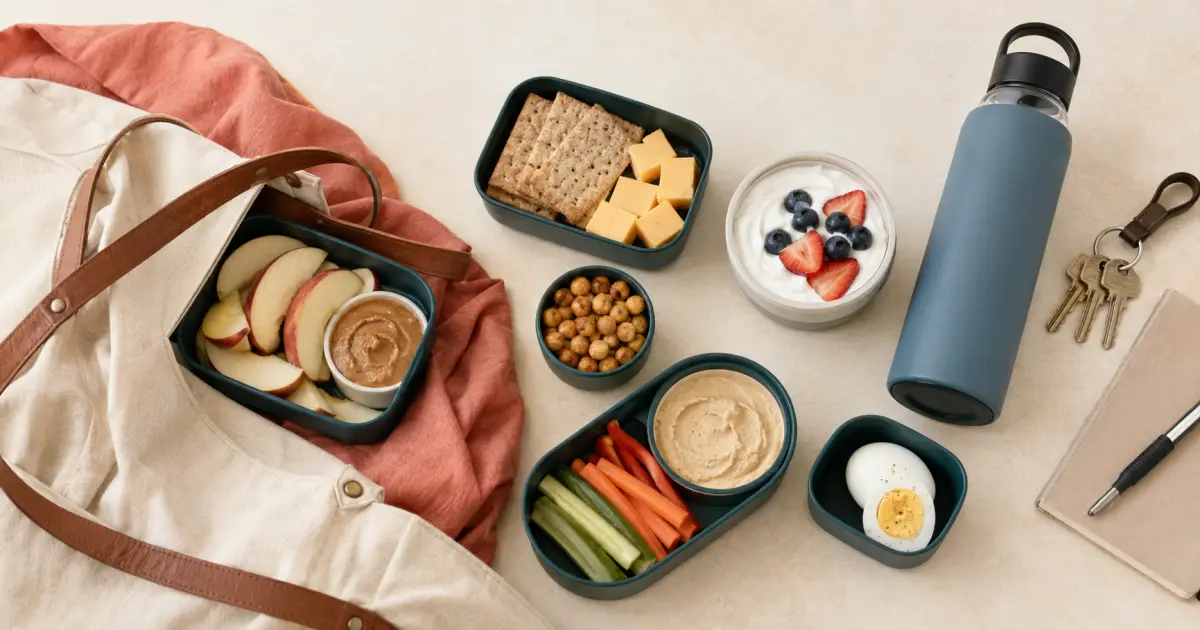
Pair two convenient foods when one item alone will not meet the job—for example fruit with nut or seed butter, yogurt with berries, vegetables with hummus, whole-grain crackers with cheese, roasted chickpeas with fruit, or a labeled snack with an unsweetened drink. Use the package serving only as a reference and adjust for your portion. Keep perishable foods cold, take one clear photo in BiteLume before eating and include drinks, dips or second portions.
- USDA MyPlate — Healthy Snacking With MyPlate
- National Institute of Diabetes and Digestive and Kidney Diseases — Keep Active and Eat Healthy to Improve Well-being
- U.S. Food and Drug Administration — How to Understand and Use the Nutrition Facts Label
- USDA Food Safety and Inspection Service — Keeping Bag Lunches Safe
- USDA FoodData Central — Food Search
Choose the snack for the job, not for a moral label
Healthy is not a score that divides snacks into good and bad. A snack can be useful because it bridges a long meeting, adds food before training, prevents a perishable lunch from being your only option, or simply tastes good. Allergies, medication, culture, access, budget and appetite all change what is appropriate.
Name the practical constraint first. Does the snack need to survive a commute without refrigeration? Fit in a desk drawer? Be quiet in a shared office? Use foods already at home? Once the job is clear, the list of realistic choices becomes shorter and more useful.
The USDA MyPlate snacking guide recommends combining food groups and gives examples such as yogurt with berries, apple with nut butter and vegetables with hummus. Treat those as adaptable structures. Substitute for allergies, dietary patterns and availability rather than forcing an ingredient that does not work for you.
Swipe to see the full table
| Snack job | Useful feature | Example structure |
|---|---|---|
| Desk drawer backup | Shelf-stable and portionable | Roasted legumes plus dried or fresh fruit |
| Short commute | Easy to hold and low-mess | Banana plus a labeled nut or seed packet |
| Long afternoon gap | Two complementary components | Yogurt plus berries or crackers plus cheese |
| No refrigeration | Food-safe at room temperature | Whole fruit plus shelf-stable protein food |
| Very limited time | Single package with a clear label | A product chosen for your needs and portion |
Related: Adapt protein-focused ideas for mornings and longer gaps
Use a two-part template when you need more than one item
Start with one easy base: fruit, vegetables, whole-grain crackers, bread, popcorn or another familiar carbohydrate food. Add a second component such as yogurt, cheese, hummus, beans, tofu, eggs, fish, poultry, nuts or seeds when it fits your needs. The pairing is a convenience framework, not a rule about which foods may be eaten alone.
Include flavor and texture deliberately. A dip, spread, seasoning or small sweet addition can make the snack more enjoyable, but it still belongs in the record. Portion dense spreads and nuts in a container rather than assuming the handful in the photo matches a database serving.
If you prefer one packaged product, read the whole label. Protein, fiber, added sugars, sodium, saturated fat and calories answer different questions. Choose the details relevant to you instead of buying the package with the loudest front-label claim.
- Name the setting, time gap and storage limits.
- Choose one base food you will actually eat.
- Add a second component if the snack needs more substance.
- Portion dips, spreads, nuts and multi-serving packages.
- Pack for food safety and record what you consume.
12 portable snack ideas to adapt
These examples intentionally avoid fixed calorie or macro totals. An apple varies in size, yogurt tubs differ by formulation, and a spoonful of nut butter can be level or heaped. Use the exact label or a well-matched USDA record for the foods and portions in front of you.
Choose variety over a single optimized snack when practical. A rotation can reduce boredom and spread choices across fruits, vegetables, grains, dairy or alternatives, and varied protein foods. Convenience foods still count as food; the goal is a workable option, not a performance of perfection.
Swipe to see the full table
| Portable idea | How to pack it | What to include in the log |
|---|---|---|
| Apple with nut or seed butter | Whole fruit plus a measured cup or packet | Fruit size and spread amount |
| Yogurt with berries | Insulated bag and cold pack | Exact yogurt tub and toppings |
| Vegetables with hummus | Pre-cut container kept cold | Vegetable amount and dip portion |
| Crackers with cheese | Portion both before leaving | Cracker count, cheese amount and extras |
| Roasted chickpeas with fruit | Two shelf-stable containers | Prepared product, serving and fruit size |
| Hard-cooked egg with toast | Keep egg properly chilled | Egg count, bread and spread |
| Edamame cup | Use a chilled or safely heated portion | Edible bean portion and seasoning |
| Trail mix you assemble | Measure ingredients into one container | Nuts, seeds, fruit and sweet add-ins |
| Popcorn with a protein side | Bag a portion; pack the side safely | Oil, seasoning and companion food |
| Tuna or bean snack kit | Use a sealed shelf-stable kit as directed | Crackers, spread and complete package |
| Cottage cheese with fruit | Leakproof chilled container | Cottage cheese portion, fruit and sweetener |
| Leftover mini snack box | Separate cold components | Every compartment, dip and amount eaten |
Read a packaged snack beyond the front of the wrapper
Front-label phrases are summaries or marketing claims. Turn the package over and start with servings per container and serving size. If the bag contains three servings and you expect to eat from it across several days, divide it into containers or record the fraction consumed. If you finish the bag, use the whole-container amount.
Match the purpose of the snack to the information you compare. Someone checking an allergy needs the ingredient and allergen statements. Someone following a clinician's sodium guidance needs the sodium line. Someone tracking macros may compare protein, carbohydrate and fat. No single number defines the entire product.
Keep the wrapper or take a label photo until the entry is saved. Brand, flavor and package size matter. Selecting a generic snack bar because its name looks similar can create more error than using the product's own current label.
The FDA explains that serving sizes reflect amounts people typically consume; they are not recommendations for how much an individual should eat. Use the label value as a calculation reference for your actual portion.
Make portability safe, not merely convenient
Perishable snacks need temperature control. USDA food-safety guidance recommends using an insulated lunch container with cold sources for perishable foods. Yogurt, cheese, eggs, cut produce, cooked leftovers, fish and meat should not spend a long workday warming in an ordinary bag.
Pack cold items directly from the refrigerator and follow product storage directions. Wash reusable containers and hands, prevent leaks and keep foods separated when cross-contamination is a concern. When safe storage is unavailable, choose an appropriate shelf-stable option rather than hoping a perishable snack will be fine.
Discard food when safety is doubtful. The calories in a packed snack are never a reason to eat something that has been held unsafely. People who are pregnant, older, immunocompromised or managing particular conditions may need additional food-safety guidance from a qualified source.
- Use an insulated bag and adequate cold sources for perishables.
- Follow the package's refrigeration and storage directions.
- Keep hands, utensils and reusable containers clean.
- Avoid cross-contamination between raw and ready-to-eat foods.
- Choose shelf-stable foods when cold storage is unavailable.
Capture small snacks before wrappers and portions disappear
Snacks are easy to omit because they happen between planned meals. Take one photo before opening the package or beginning to eat. Include every component, dip and calorie-containing drink. If you share the package, have seconds, or leave part behind, account for the amount actually consumed when reviewing the result.
For a multi-compartment snack box, photograph from above so the sections remain visible. Keep foods from covering each other and place a familiar utensil or package in frame when it naturally supplies scale. The image does not need to be styled; it needs to preserve the evidence.
When the snack is a repeat item, keep a specific note of its usual product and portion. Recheck it if the product, container or portion changes. A note called afternoon snack is too vague; apple plus measured peanut butter or yogurt tub with berries tells you what the record represents.
Use BiteLume for a quick snack record
Open BiteLume, photograph the complete snack and review the foods, portions and estimated calories and macros. For a packaged item, compare the estimate with the exact Nutrition Facts label. For a dip, spread or mixed snack, use the known amount or ingredient list to judge what the camera cannot infer.
Record what you ate, not what you packed, and account for leftovers, shared items and refills when reviewing the result. A photo-based estimate remains an estimate, so use labels, measured recipes or professional guidance when greater precision is important.
At the end of a week, ask a practical question rather than grading the snacks. Which options were still available when meetings ran late? Which needed a cold pack you did not have? Which portions were easy to see and log? Use the answer to improve the packing routine, not to label yourself as consistent or inconsistent.
Questions people also ask
What is a healthy snack for an adult on the go?
A useful on-the-go snack fits your dietary needs, storage conditions, budget, appetite and schedule. Flexible examples include fruit with nut or seed butter, vegetables with hummus, yogurt with berries, or crackers with cheese.
What snacks can stay in a desk drawer?
Choose products labeled for shelf-stable storage, such as sealed roasted legumes, whole fruit, crackers, nut or seed packets, or a suitable packaged snack. Follow the product's storage directions and avoid keeping perishable foods at room temperature.
How do I count calories in a multi-serving snack bag?
Multiply the label values by the number or fraction of servings you actually ate. Portion the bag in advance or estimate what remains, and do not assume the listed serving is the amount you consumed.
Can BiteLume log a snack from a photo?
BiteLume can estimate calories and macros from visible foods and portions in a snack photo. Review the result against package labels, measured recipes or ingredient notes for dips, spreads, fillings and amounts hidden from the camera.
- Adapt protein-focused ideas for mornings and longer gaps
- Use a low-friction logging routine on busy days
- Stop snacks and drinks from disappearing from the daily log
- Estimate portions consistently without weighing every snack
- Keep a visual record of meals, snacks and drinks
- Understand how package and handful size change an estimate
Make the next meal easier to track.
Use a photo to get a calorie and macro starting point, review the details, and keep your progress in one place.