
Calories measure energy; macros measure protein, carbohydrate and fat in grams. Protein and carbohydrate provide about four calories per gram, while fat provides about nine, although labels can differ because of fiber, alcohol, sugar alcohols and rounding. Track the smallest set of numbers that helps you make a useful decision rather than trying to perfect every daily total.
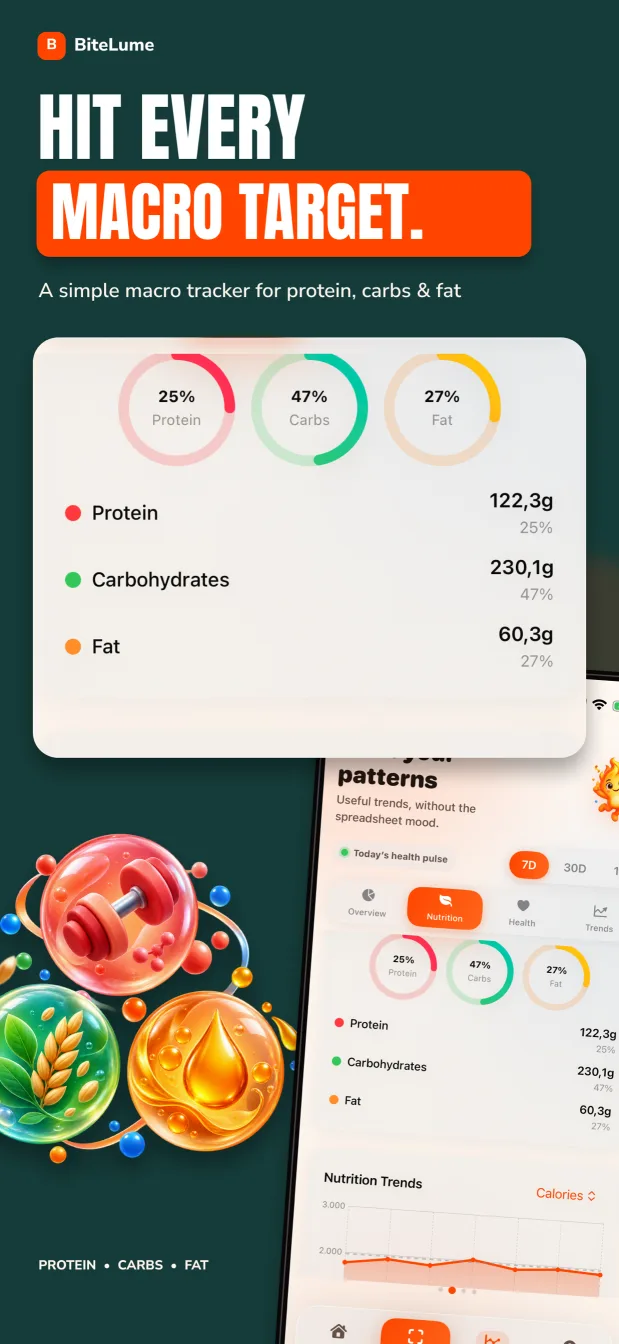
Calories vs macros at a glance
A calorie is a unit of energy. On a Nutrition Facts label, the calorie line combines energy from carbohydrate, fat, protein and alcohol in one total. That makes calories useful for comparing the energy in different portions and for seeing how meals contribute to an overall intake pattern.
Macros is shorthand for macronutrients. In everyday food tracking, people usually mean protein, carbohydrate and fat. These nutrients are measured in grams, not calories. They do more than provide energy: protein supplies amino acids, carbohydrate includes sugars, starches and fiber, and dietary fats carry fatty acids and support the absorption of fat-soluble vitamins.
The relationship is mathematical but not perfectly reversible from a single photo or label. Standard energy factors are commonly summarized as about four calories per gram for protein and carbohydrate and nine for fat. Fiber, sugar alcohols, alcohol, rounding rules and the way a food is analyzed can make label arithmetic differ from a simple multiplication exercise. Use the declared calorie total when a reliable label is available rather than assuming your calculator has caught every detail.
Swipe to see the full table
| Measure | What it tells you | Typical unit | What it can miss |
|---|---|---|---|
| Calories | Total food energy | kcal | Nutrient balance and food quality |
| Protein | Amount of protein | grams | Protein source and the rest of the meal |
| Carbohydrate | Total carbohydrate | grams | Differences among fiber, starch and sugars |
| Fat | Total dietary fat | grams | Fatty-acid profile and cooking context |
What calorie tracking is good at
Calorie tracking offers a compact answer to a broad question: how energy-dense is this meal, and how does it fit into the day? It can expose differences that visual size hides. A small pour of oil and a large bowl of vegetables occupy very different volumes, yet the oil can contribute substantial energy because fat is energy-dense.
What calories cannot tell you is whether a meal will be satisfying, varied or appropriate for your needs. The same calorie total might come from a meal containing protein, fiber-rich foods and produce or from a sweet drink and snack. Treat the number as one dimension, not a grade for whether food is good or bad.
Energy is important, but meals also need nutrients, enjoyment and enough food to be sustainable. A qualified professional can help when medical conditions, pregnancy, growth, sports performance or an eating-disorder history change the equation.
What macro tracking adds
Macro tracking adds composition. Protein is often the first macro people monitor because it can be easy to overlook across a busy day, and it matters alongside resistance training for maintaining and building muscle tissue. Carbohydrate is a major energy source and can be particularly relevant around demanding activity. Fat contributes energy, flavor and essential fatty acids.
The benefit is diagnostic rather than moral. If breakfast leaves you hungry soon afterward, its log may show plenty of calories but little protein or fiber-containing carbohydrate. If a high-volume restaurant meal repeatedly exceeds your expected calories, the fat estimate may reveal oil, dressing or cheese as the likely source. Those observations give you something practical to test at the next meal.
Macro totals still do not capture everything. Twenty grams of carbohydrate from beans does not bring the same package of fiber and micronutrients as twenty grams from a sweetened drink. Twenty grams of fat says nothing by itself about the balance of saturated and unsaturated fats. Use macros to ask better questions, then look back at the foods providing them.
Choose the smallest set of numbers that changes a decision
More data is not automatically more useful. If logging five targets makes meals feel like accounting, begin with the one number connected to a real decision. Someone learning the energy range of takeout lunches might watch calories. Someone planning strength-training meals might watch protein while keeping only a loose eye on calories. An endurance athlete may care about carbohydrate availability in addition to overall energy.
A simple test is to ask: what will I do differently when this number is high or low? If there is no clear answer, the metric may be clutter. You can always add it later after the logging habit feels easy.
- For general awareness: log meals and review calories as a broad range.
- For a protein-focused goal: track calories and protein, then get variety from ordinary food choices.
- For performance: discuss energy and macro needs with a sports dietitian, especially during intense training.
- For a medical nutrition target: use the measures and method recommended by your clinician rather than a generic app target.
Think in ranges and patterns, not perfect numbers
Food records contain measurement error. Portions change, recipes vary and people forget extras. The National Cancer Institute’s Dietary Assessment Primer emphasizes that all self-reported dietary data contain some error. Photo estimates add another layer because a camera cannot see the exact weight or hidden ingredients.
That does not make tracking pointless. It changes the right question from ‘Did I consume exactly 1,947 calories?’ to ‘What pattern does this consistent method show?’ Keep your process steady, review several days and compare like with like. A recurring pattern is more actionable than a dramatic reaction to one dinner.
Use labeled foods when you have the package, restaurant nutrition data when it matches the item ordered and a reviewed estimate when neither exists. Adjust entries you know are incomplete. Consistency improves the signal even when no individual entry is laboratory-grade.
A practical way to read calories and macros together
Start with the calorie estimate to understand the meal’s energy scale. Then scan the protein, carbohydrate and fat values for the feature you care about. Finally, return to the actual plate. Is there a meaningful protein source? Are fruits, vegetables, beans or whole grains present? Are oil, sauce, cheese or a caloric drink missing from the record? Numbers work best when they prompt this visual check.
Imagine a grain bowl that seems unexpectedly high in calories. Its macro view shows much more fat than similar lunches. Looking at the photo reminds you about avocado, tahini dressing and oil-roasted vegetables. None is inherently a problem, but together they explain the total. Next time you can keep the combination, reduce one portion or simply plan around it—with no need to label the meal a failure.
Use BiteLume as a starting point, then apply your judgment
With BiteLume, photograph the whole meal, review the recognized foods and inspect both the calorie and macro estimates. Correct an item when you know the preparation, add a sauce or drink the camera could not identify, and save the meal only after that review. The app can make the first draft quicker; you remain the best source for what happened off camera.
After several days, look for repeatable observations rather than perfect target hits. Perhaps lunches are consistently low in protein, weekend meals include more extras, or one breakfast keeps logging easy because its ingredients are predictable. Use one observation to shape one small experiment. The guide to tracking macros from a food photo covers the review workflow, while the protein-tracking article explores a common goal.
Questions people also ask
Should I count calories or macros?
Track calories when your main question is total energy intake. Add protein, carbohydrate or fat when one of those nutrients affects a goal, training plan or meal decision. You do not need to track every number.
Do macros add up to calories?
They explain most food energy: protein and carbohydrate provide about four calories per gram and fat about nine. Label totals may not match simple arithmetic exactly because of fiber, alcohol, sugar alcohols, testing methods and rounding.
Can two meals have the same calories but different macros?
Yes. Meals with the same calorie total can contain different amounts of protein, carbohydrate and fat. The calorie number shows energy, while the macro breakdown shows part of the meal’s composition.
Are macros more important than calories for weight loss?
Macros do not replace energy intake. They organize protein, carbohydrate and fat within an overall eating pattern. No single macro split is best for everyone, so medical or performance needs should be personalized with qualified guidance.
Make the next meal easier to track.
Use a photo to get a calorie and macro starting point, review the details, and keep your progress in one place.
Download on theApp Store