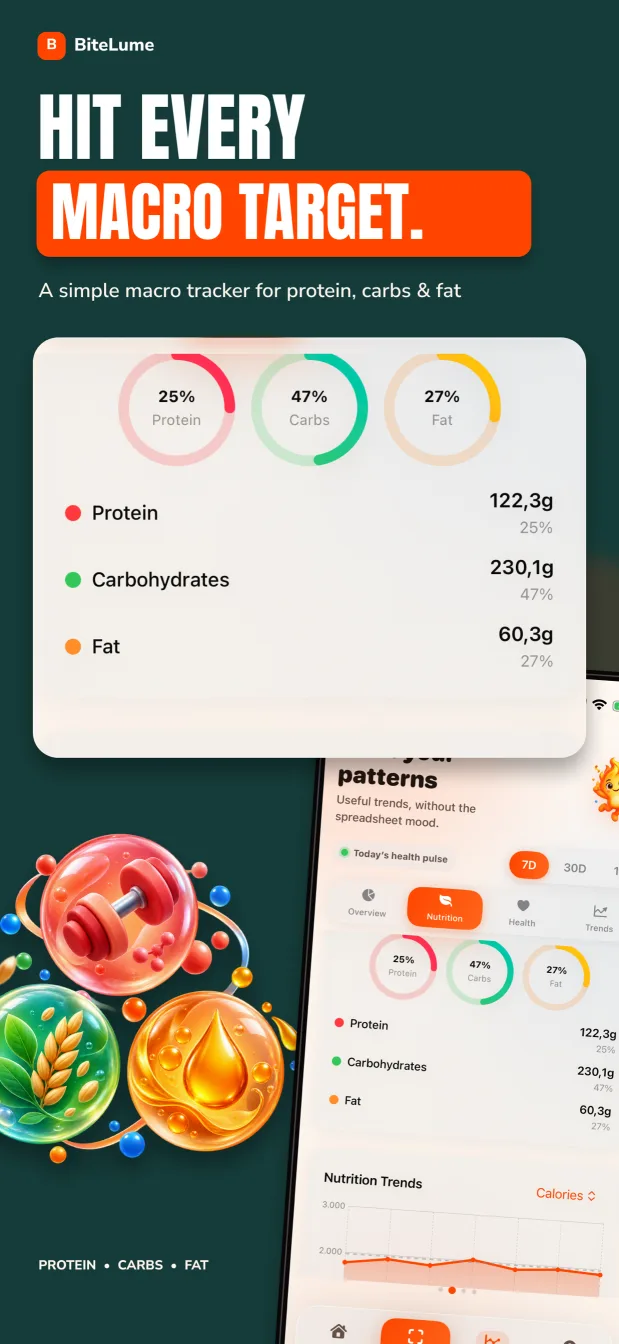
Choose a protein goal only if it serves a real purpose, then divide it into practical meal checkpoints. At each meal, record the main protein sources—such as eggs, yogurt, beans, tofu, fish, poultry or meat—using the label, a reliable database or a reviewed estimate. You can leave unrelated ingredients untracked. In BiteLume, scan the full meal, check the protein estimate against known foods and portions, and review the pattern across several days rather than chasing an exact daily number.
Decide what a protein-only log needs to answer
Before opening an app, name the decision the log should support. Perhaps you want to see whether breakfast usually includes a meaningful protein source, whether lunch is the weak point in your day, or whether meals around resistance training are reasonably distributed. Each question needs less data than a complete calorie-and-macro audit.
Protein needs are individual. Body size, age, training, life stage, health conditions and overall energy intake can change what is appropriate. A generic target from social media is not a diagnosis or prescription. If your goal comes from a clinician or registered dietitian, use the amount and method they recommended rather than replacing it with an app default.
Once the question is clear, define a minimum useful entry. For many people, that is the protein food, the portion and the meal. Calories, oils and vegetables can remain visible in the meal photo without requiring separate entries. This narrow scope is not cheating; it is a deliberate measurement plan.
If you cannot say what you will learn or change from a protein number, collect a simpler record first. More detail does not automatically create a better decision.
Related: Track protein around resistance training without false precision
Count the foods that supply most of the protein
Start with the obvious contributors: meat, poultry, fish, eggs, dairy foods, soy foods, beans, lentils, nuts, seeds and products made around them. Grain foods and vegetables can also contribute protein, but painstakingly entering every gram from spinach, sauce or seasoning rarely changes a practical meal estimate. Let the large contributors establish the first version of the log.
Use the source that best matches what you ate. A current package label is strong evidence for a branded yogurt or protein bar. A restaurant's own nutrition information is useful for a matching standard item. USDA FoodData Central can help with basic foods. When none of those matches, choose a comparable food and mark the value as an estimate instead of quietly presenting it as exact.
Mixed dishes need a component check. A bowl of chili may contain beans and meat; a curry may contain tofu, chicken or mostly sauce; a sandwich may have a thin or generous filling. Identify the main protein ingredient and its plausible portion before borrowing a value from a dish with the same name.
Swipe to see the full table
| Meal situation | Record first | Usually safe to leave for later |
|---|---|---|
| Packaged yogurt and fruit | Exact yogurt and amount eaten | Fruit details unless you are tracking more than protein |
| Eggs on toast | Number of eggs and any protein-rich topping | Seasoning and low-protein garnish |
| Bean-and-rice bowl | Bean portion and any meat, tofu or cheese | Salsa and leafy toppings |
| Restaurant sandwich | Filling type, visible amount and published data | Minor vegetables and mustard |
| Homemade mixed dish | Protein ingredients and your share of the batch | Trace ingredients that do not affect the protein estimate |
Use meal checkpoints instead of constant arithmetic
A daily total is easier to reach when it is translated into meals you actually eat. Divide your personal target into loose checkpoints for breakfast, lunch, dinner and any planned snack. The portions do not need to be identical. Someone who prefers a light breakfast may intentionally place more protein at lunch and dinner.
Checkpoints reveal a gap while there is still time to make an ordinary food choice. If lunch repeatedly contains little protein, the useful response might be adding beans, eggs, tofu, yogurt, fish or another food that fits your preferences—not forcing a large supplement before bed. The log should make planning easier, not create a nightly test.
Treat each checkpoint as a range, not a pass-fail line. Labels round, restaurant portions vary and photo estimates carry uncertainty. Looking for a broad pattern keeps a small difference from dominating the day.
- Start with a protein target chosen for your situation or supplied by a qualified professional.
- Sketch flexible checkpoints around the meals you normally eat.
- Log the main protein foods after each meal, using the best available source.
- Notice which meal repeatedly falls well outside the intended pattern.
- Change one food or portion, then review several comparable days.
Related: Understand what protein adds beyond a calorie total
Make repeat meals do most of the work
If you often eat the same breakfast or lunch, calculate it carefully once. Save the package values and portion that correspond to the way you actually prepare it. The next time, confirm that the product and amount are broadly the same instead of rebuilding the meal from scratch.
Household portions can be enough for a lower-friction log when the serving is repeatable: one sealed yogurt cup, two eggs, half a standard tofu pack or one measured scoop from a specific product. Weighing can improve an estimate, but it is not the only path to consistency. The key is knowing what the unit means and noticing when it changes.
Recheck a saved meal when the recipe, brand or serving shifts. A cafe's large yogurt bowl is not interchangeable with your single-serve cup, and a heaped scoop does not necessarily match the scoop weight printed on a powder label. Repetition reduces work only when the repeated entry still represents the food.
- Keep the product label for packaged staples you buy often.
- Name saved meals by their meaningful portion, not just the food name.
- Update an entry when brands, recipes or serving tools change.
- Use a scale briefly when it helps you learn what an ordinary portion looks like.
- Do not count a supplement twice when it is already included in a saved shake or meal.
Use a meal photo as a prompt, then check the protein estimate
A photograph can preserve the meal and make a protein-focused log faster, but it cannot reveal an exact weight or every hidden ingredient. In BiteLume, photograph the full plate, scan it and review the identified foods and estimated macros. Pay particular attention to the protein source, its visible portion and whether it is partly hidden under bread, sauce or vegetables.
Compare the estimate with what you know. If the meal used a full labeled tofu pack, that information is stronger than a visual guess. If the chicken portion came from a batch you divided into four containers, use the known share. If you have neither measurement nor label, keep the photo estimate and treat it as a range rather than manufacturing precision.
The rest of the meal still matters even when you are only tracking protein. The photo keeps vegetables, grains, sauces and drinks in context without requiring you to itemize them. BiteLume's calorie and macro values are general-wellness estimates, not clinical measurements.
Review several days without turning protein into a score
At the end of three to seven representative days, look for the repeated shape of the log. Is one meal consistently sparse? Are weekends different from workdays? Do estimates become less reliable whenever you eat a mixed restaurant dish? These are workflow observations, not judgments about discipline.
Compare similar days before drawing conclusions. A rest day, long training day, travel day and day of illness are different contexts. One low or high estimate can reflect a missed entry, an unusual schedule or ordinary appetite. A pattern that persists across comparable days is more useful than a single total.
If detailed tracking creates anxiety, guilt, compulsive checking or pressure to avoid meals, stop. A food log is optional. A registered dietitian or other qualified professional can help choose a safer method, especially when there is an eating-disorder history or a medical nutrition concern.
Swipe to see the full table
| Pattern you notice | Question to ask | Small experiment |
|---|---|---|
| Breakfast is repeatedly low | Would a protein food fit this meal? | Add one familiar option for three mornings |
| Lunch is often missing | Is the meal missing or only the log? | Use one photo reminder at lunchtime |
| Restaurant values swing widely | Are portions and recipes comparable? | Use first-party data or record a range |
| Totals prompt constant checking | Is the log still helping? | Pause totals and keep photos only, or stop tracking |
A two-minute BiteLume protein workflow
Before eating, place the complete meal in frame and take one clear picture. After BiteLume returns a result, check that the main protein foods are present and that the estimated portions look plausible. Compare the scan with known label or recipe information when you have it, then save the result only if it remains a reasonable representation of the meal.
During the day, use the macro view to see whether protein is appearing where you intended, without treating its number as a command. Keep drinks, sides and second servings in the record when they materially change the meal. The app can reduce transcription; your review supplies context the camera cannot see.
Once a week, review the pattern and choose at most one adjustment. If no decision follows, you can simplify further. Protein tracking works best when it leaves enough attention for shopping, cooking, eating and the rest of daily life.
Questions people also ask
Can I track protein without counting calories?
Yes. Record the main protein foods, their portions and the meal where they were eaten. Calories may still appear in an app result, but you do not need to use them as your target when your question is specifically about protein.
Do I need to count protein from every vegetable and grain?
Not always. Those foods can contribute protein, but a practical first pass can focus on the largest sources. Include smaller contributors when they are important to your pattern, especially if you eat little or no animal protein.
How accurate is protein tracking from a food photo?
A photo can support identification and portion review, but it cannot prove weight, recipe or hidden ingredients. Check the estimate against labels, known recipes and measured portions whenever those sources are available.
How often should I review my protein log?
A short review after three to seven comparable days is usually more informative than reacting to each meal. Look for repeated gaps and data-quality problems, then test one manageable change.
- Track protein around resistance training without false precision
- Understand what protein adds beyond a calorie total
- Review protein, carbohydrate and fat from a meal photo
- Build a practical breakfast around familiar protein foods
- Choose a food-logging method you can maintain
- Take a clearer photo for more reviewable estimates
Make the next meal easier to track.
Use a photo to get a calorie and macro starting point, review the details, and keep your progress in one place.