List the salad's base, protein, toppings and dressing. Use the package label or restaurant nutrition for an exact matching item; otherwise compare each component with a reliable food record and a plausible portion. Measure dressing separately when you can, include oil used on roasted ingredients and adjust for what remained in the bowl. In BiteLume, scan the full salad, review every visible component and compare the result with known label or recipe information where available.
Treat the salad as a small recipe, not one food
The word salad describes a format, not a calorie range. A bowl of lettuce, cucumber and tomatoes with lemon differs from a grain bowl with chicken, cheese, nuts, avocado and oil-based dressing. Even two Caesar salads can differ in plate size, dressing amount, croutons, cheese and protein.
Start with an inventory before reaching for a number. Name what is visible, then add what you know happened before serving: vegetables roasted in oil, sugar or oil in a marinade, a second pour of dressing or toppings hidden under the leaves. This approach takes slightly longer than selecting the first database match, but it creates an estimate you can explain and revise.
You do not need laboratory precision for a useful home log. The goal is to avoid a false shortcut in which the biggest-looking ingredient receives all the attention while smaller, energy-dense ingredients disappear.
Swipe to see the full table
| Salad layer | Examples | Best first question |
|---|---|---|
| Base | Leafy vegetables, cabbage, grains, pasta, potatoes | Is this mostly non-starchy vegetables or a cooked starch? |
| Protein | Chicken, fish, eggs, tofu, beans, cheese | What is the cooked or served portion? |
| Concentrated toppings | Nuts, seeds, croutons, dried fruit, avocado | How many spoonfuls, pieces or package servings? |
| Dressing and cooking fat | Vinaigrette, creamy dressing, oil, mayonnaise | Was it measured, on the side or already mixed in? |
Related: Account for dressing, cooking oil and sauces a photo may hide
Identify whether the base is leafy, starchy or mixed
For a mostly leafy salad, estimate the volume of greens and the larger vegetables separately only when that distinction will matter. Lettuce, cucumber, tomato, peppers and similar vegetables can take up much of the bowl. A reasonable volume description is usually enough for a general-wellness log when no exact weight exists.
Grain, pasta, potato, couscous, quinoa and noodle salads need a different starting point. Their cooked base can contribute substantially to the total, and a deep bowl can hide how much sits below the toppings. Estimate the cooked amount in cups or grams, and make sure the food record matches the cooked state rather than a dry weight.
Mixed bases deserve two entries. A salad may contain a bed of greens over rice, lentils or roasted sweet potato. Photographing only the colorful top can make the starch underneath easy to miss. Gently separating one section before the photo can reveal the depth without dismantling the meal.
A wide shallow bowl and a narrow deep bowl can look similar from above. Keep the rim visible, use a slight angle and review depth before assigning volume.
Estimate protein and toppings as distinct components
Count pieces when the food is discrete: half an egg, six shrimp, a sliced chicken breast or several tofu cubes. Then compare their likely cooked weight with a package, recipe or FoodData Central entry. For shredded meat, tuna salad or crumbled cheese, use spoonfuls, cups or a familiar portion reference rather than pretending the photograph supplies an exact weight.
Give nuts, seeds, cheese, dried fruit, croutons and avocado their own line. These foods can be nutritious parts of a meal, and they are also easy to underestimate because they occupy less space than lettuce. Moral labels are not useful here; visibility is. The estimate improves when every material component has a plausible amount.
Beans and lentils may function as both protein and a starchy component. Count them once. Similarly, cheese should not be entered under protein and again under toppings. Organizing the bowl into categories is a checking method, not a reason to duplicate ingredients.
- Use the exact label for packaged grilled chicken, cheese or plant-based protein.
- Match cooked food to cooked data and drained canned food to a drained record.
- Count visible pieces before converting them to a likely amount.
- Keep toppings separate when their portions can vary independently.
- Avoid counting the same ingredient in two categories.
Related: Use visual portion ranges without pretending they are exact
Give dressing, oil and sauce a separate calculation
Dressing is often the least visible part of the finished salad. Once tossed, a thin coating can cover many leaves without forming a measurable pool. Begin with the recipe, label or portion cup if available. Note how much was served, how much you used and how much remained rather than assigning the full container automatically.
For homemade vinaigrette, total its ingredients as a recipe. Oil, vinegar, mustard, herbs and sweeteners do not contribute equally, so a generic spoonful can be misleading. If a well-mixed batch made eight tablespoons and you used two, record one quarter of the batch; weighing the portion is even better when the dressing separates. Recalculate when the oil-to-acid ratio changes.
Also include cooking fats attached before assembly. Roasted vegetables, fried chicken, marinated tofu and toasted croutons may contain oil that is not visible as dressing. Avoid adding the entire oil amount from a pan when much was left behind; use the recipe's intended share or a stated estimate and document the uncertainty.
- Find the labeled serving or total homemade recipe amount.
- Estimate how much dressing was offered with your portion.
- Subtract a meaningful amount left in the cup or bottom of the bowl.
- Add cooking oil from roasted, fried or marinated components when relevant.
- Keep unknown restaurant dressing as a range if the recipe cannot be verified.
Use restaurant facts without assuming every order is standard
For a U.S. chain covered by federal menu-labeling rules, begin with the restaurant's current nutrition information for the exact salad and size. Check whether the displayed number includes dressing, protein, bread, tortilla strips or other components. Some restaurants list those separately, and custom changes can move the order away from the published standard.
At an independent restaurant, save the menu description and take a complete photo. Break the bowl into visible components, ask whether dressing is included when that is easy to establish and use a comparable recipe only as a range. A crowd-sourced entry with the same name but no matching restaurant, portion or ingredients is weak evidence.
Salad bars create a portion problem because many small spoonfuls accumulate. Photograph the plate before eating and note the number of serving spoons for dense toppings or dressing. If you return for seconds, give the second plate its own photo instead of enlarging the first estimate from memory.
Swipe to see the full table
| Evidence available | How to use it | What still needs review |
|---|---|---|
| Exact chain listing | Start with published total | Size, dressing inclusion and customizations |
| Package labels | Scale each labeled ingredient | Amount actually used and leftovers |
| Menu description plus photo | Estimate visible components | Hidden oil, recipe and depth |
| Food name only | Use a broad comparison | Treat the result as low-confidence, not exact |
Adjust the estimate for leftovers and separate sides
A served salad is not automatically an eaten salad. Large leaves, dressing at the bottom, croutons left on the plate or half the protein saved for later can change the consumed portion. When the difference is meaningful, take a quick after photo and subtract the clearest leftovers component by component.
Keep extras connected to the correct eating occasion. Bread, soup, a drink or a shared starter may accompany the salad without being part of it. Logging them separately prevents a misleading conclusion that the salad itself contained the whole meal's total, and makes the entry easier to reuse when you order the salad alone.
Do not spend ten minutes accounting for one tomato fragment. Choose a threshold that affects your purpose and use it consistently. Measurement error exists in every self-reported food record; a clear, repeatable method is more informative than selectively precise estimates.
Scan and review a salad in BiteLume
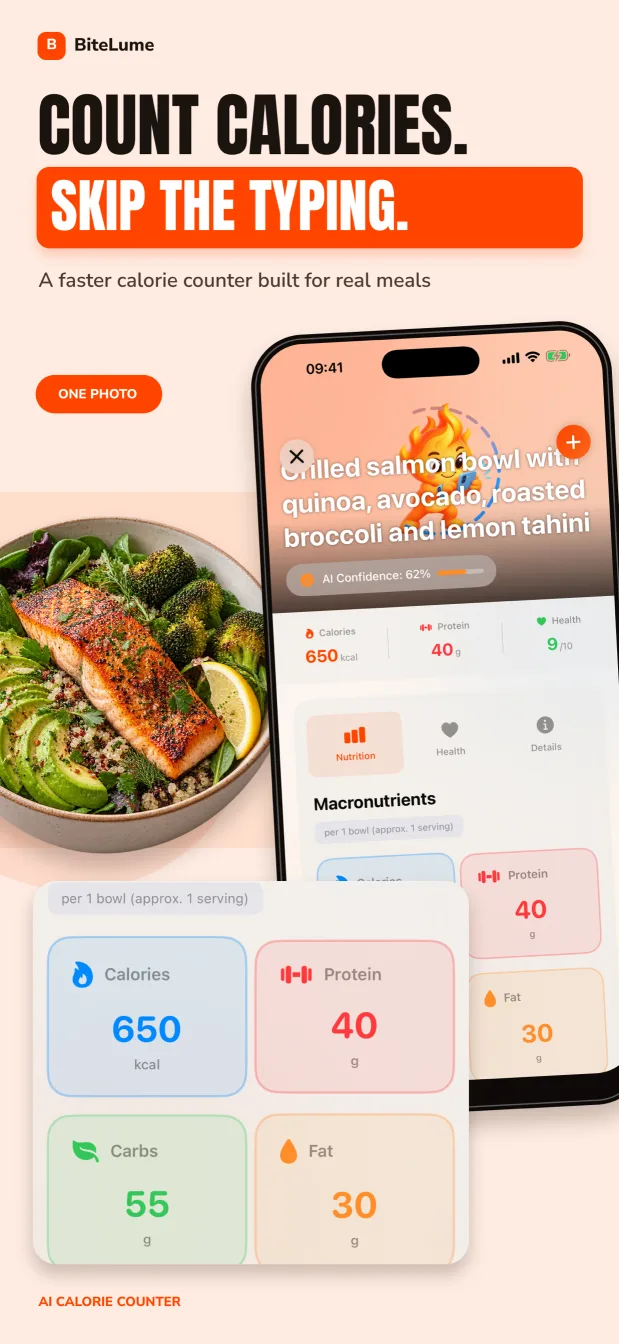
Take a photo from a slight angle with the whole bowl visible. If ingredients are layered, expose a small section of the base and keep any dressing cup, bread or drink in frame. BiteLume can use the image to estimate foods, portions, calories and macros, but the scan is a starting point rather than proof of the recipe.
Review the result in the same four-part order: base, protein, toppings and dressing. Account separately for anything the camera could not see, compare known package portions with the estimate and check that no ingredient appears twice. If the dressing recipe or bowl depth is unknown, preserve a range in your reasoning rather than forcing an exact total.
Save the meal to the diary and compare repeated versions over time. If you order the same salad often, the useful question is whether your method is consistent enough to compare occasions—not whether a photograph can produce laboratory accuracy. BiteLume is a general-wellness app; use qualified guidance when food tracking is part of medical care.
Questions people also ask
How many calories are in a typical salad?
There is no dependable typical total. A salad can range from mostly vegetables to a complete meal with grains, protein, cheese, nuts and dressing. Estimate the specific components and portions instead of using the food name alone.
Should I count salad dressing separately?
Yes, unless a verified recipe or restaurant total already includes it. Use the label or homemade recipe and the amount actually consumed, including a sensible adjustment for dressing left in the cup or bowl.
How do I estimate a restaurant salad without nutrition information?
Save the menu description, photograph the full bowl and estimate the base, protein, toppings and dressing separately. Use comparable foods as ranges and note uncertainty around hidden oil, dressing recipes and bowl depth.
Can an AI photo scanner count salad calories accurately?
It can provide a practical estimate and preserve the meal, but a photo cannot reveal exact weight, hidden oil or the complete dressing recipe. Review the scan against labels, menu facts and what you know about the portion.
- Account for dressing, cooking oil and sauces a photo may hide
- Use visual portion ranges without pretending they are exact
- Estimate restaurant meals from the strongest available evidence
- Build a meal around components rather than a calorie score
- Track layered bowls and mixed foods component by component
- Photograph a deep bowl so portions are easier to review
Make the next meal easier to track.
Use a photo to get a calorie and macro starting point, review the details, and keep your progress in one place.