Build an egg-free breakfast around yogurt, cottage cheese, tofu, beans, fish or chicken. The eight ideas below give ingredient amounts and preparation steps. Use your own product labels and the number of portions you make to calculate calories and protein; brands and substitutions change the result.
Choose the protein anchor before the toppings
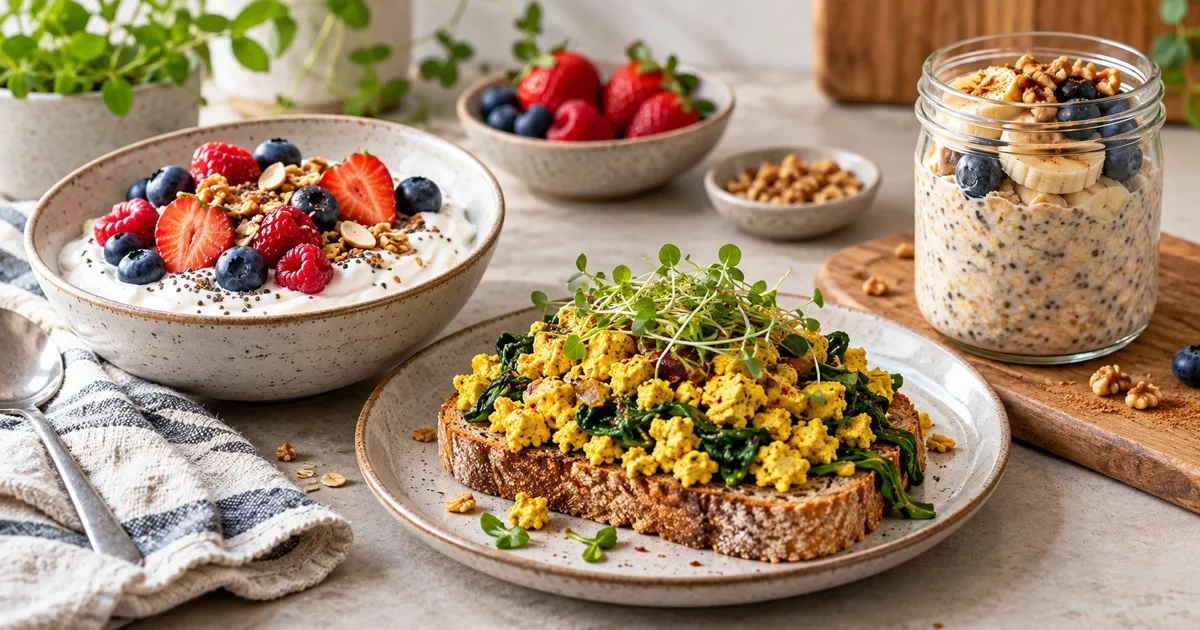
Plain strained yogurt, cottage cheese, firm tofu, cooked beans, fish and poultry offer different ways to build breakfast. Their protein amounts vary by product and preparation. A plant-based yogurt can be a useful option, but its name alone does not establish that it matches a dairy or soy product in protein.
Choose a portion that fits your own needs and appetite. The recipes give ingredient amounts so you can calculate nutrition from your products' current labels or a matching food database record.
Sources for this section: USDA FoodData Central: edible portions and food descriptions · FDA: how to understand and use the Nutrition Facts label
Related: Compare broader breakfast templates and protein anchors
Eight recipes to prepare and portion
Recipes make one serving unless noted otherwise. Check bread, tortilla and other ingredient labels if avoiding eggs. If you have an egg allergy, also check the manufacturer's allergen and cross-contact information.
1. Yogurt, oat and berry bowl
One serving: 200 g plain strained yogurt, 35 g rolled oats, 100 g berries and 10 g pumpkin seeds.
Stir the oats into the yogurt, loosen with a little water if needed, and top with berries and seeds. For a softer texture, cover and refrigerate overnight. The yogurt is the main protein anchor; check its label because ordinary and strained yogurts differ.
Weigh the seeds before scattering them over the bowl. Count honey, granola or nut butter if you add them. The photograph can show toppings more clearly before everything is mixed together.
2. Cottage-cheese tomato toast
One serving: 200 g cottage cheese, 60 g egg-free wholegrain bread, 100 g chopped tomato and black pepper.
Toast the bread and spoon the cottage cheese on top. Add tomato and pepper just before eating so the bread stays crisp. If carrying it to work, pack the topping separately and keep the dairy chilled.
Use the actual bread and cottage-cheese labels. The slice count alone is a poor substitute for bread weight when slices vary. Add butter or oil separately if used.
3. Tofu and black-bean breakfast skillet
Two servings: 300 g firm tofu, 160 g drained cooked black beans, 150 g pepper, 100 g spinach, 10 g oil and smoked paprika.
Drain and crumble the tofu. Soften the chopped pepper in the measured oil, add tofu, beans and paprika, and cook until heated through. Fold in the spinach until wilted, then divide the finished mixture into two portions.
Match the tofu brand and the drained bean amount. The ten grams of oil belongs to the whole two-serving batch. Bread or tortillas served alongside are additional components.
4. Salmon and yogurt rye plate
One serving: 80 g ready-to-eat cooked salmon, 100 g plain strained yogurt, 60 g egg-free rye bread and 100 g cucumber.
Flake the cooked salmon and serve it with the yogurt, bread and sliced cucumber. Add lemon or dill if you like. This also works with an appropriately stored cooked salmon portion from an earlier meal.
Use a cooked salmon record or the exact package, not raw fish data. Check bread ingredients if avoiding eggs, and count any spread added to it. Keep perishable ingredients chilled until serving.
5. Soy yogurt overnight oats
One serving: 200 g high-protein plain soy yogurt, 40 g oats, 100 mL unsweetened soy drink, 10 g chia seeds and 80 g berries.
Combine the yogurt, oats, soy drink and chia in a covered container. Refrigerate overnight and add the berries before eating. Choose a soy yogurt whose protein content fits the breakfast you want; plant-based yogurts are not nutritionally interchangeable.
Use the exact yogurt and drink labels and keep their units straight. A coconut-based yogurt is not automatically a like-for-like protein substitute for a soy product.
6. Bean and cheese breakfast wrap
One serving: one egg-free tortilla with its weight recorded, 120 g drained cooked beans, 40 g grated cheese, 60 g salsa and 50 g spinach.
Warm the beans with the salsa, fold in spinach, and spoon into the tortilla. Add cheese, fold and warm in a dry pan until the filling is hot. Cut it across the middle so the filling is easy to inspect.
Use a matching drained-bean reference and the actual tortilla label. Count pan oil only if used; do not add it by assumption. The filling is a prepared mixture, so avoid logging both the whole wrap and every component.
7. Chicken and warm potato breakfast bowl
One serving: 100 g cooked chicken, 150 g cooked potato, 100 g tomatoes, 50 g spinach and 5 g oil.
Slice the cooked potato and warm it in the measured oil. Add chicken and tomatoes, heat through, then fold in spinach. Breakfast does not have to use a sweet or traditionally breakfast-only protein source.
The chicken and potato amounts here are cooked weights. Match both references to that state and record any sauce separately. Use properly chilled leftovers and follow local reheating guidance.
8. Yogurt and buckwheat breakfast pot
Two servings: 120 g dry buckwheat groats, 400 g plain strained yogurt, 200 g apple and 20 g chopped walnuts.
Cook the buckwheat in water according to its packet, then cool it promptly for a cold pot or serve it warm separately. Split the cooked batch between two bowls with 200 g yogurt, 100 g chopped apple and 10 g walnuts each.
Calculate the groats from the dry ingredient amount used for the batch, then divide into two servings. Do not also add a second cooked-buckwheat entry. Use the yogurt and walnut labels for the remaining components.
Calculate calories and protein from the ingredients you used
For each ingredient, divide the amount used by the reference serving amount and multiply by its stated calories or protein. Add the ingredients, then divide by the recipe's actual number of portions. Keep grams aligned with grams and milliliters with milliliters.
For example, if a hypothetical yogurt label lists 10 g protein per 100 g, a 200 g portion contributes 20 g protein. That does not establish the value for your yogurt, and it does not include protein from oats or other ingredients. Check the full recipe before attaching a total to the finished bowl.
Substitutions change the record, not just the flavor
Replacing yogurt with another brand, switching a tortilla size or pouring extra oil can change the recipe's nutrition. Keep the quantities that matter visible and update the calculation when the ingredients change materially.
For a two-serving recipe, divide the finished food fairly or weigh the serving you take. If you add toast, a latte or a side of fruit, include those in the eating occasion. They are not automatically inside the recipe total.
Use BiteLume with the breakfast you actually made
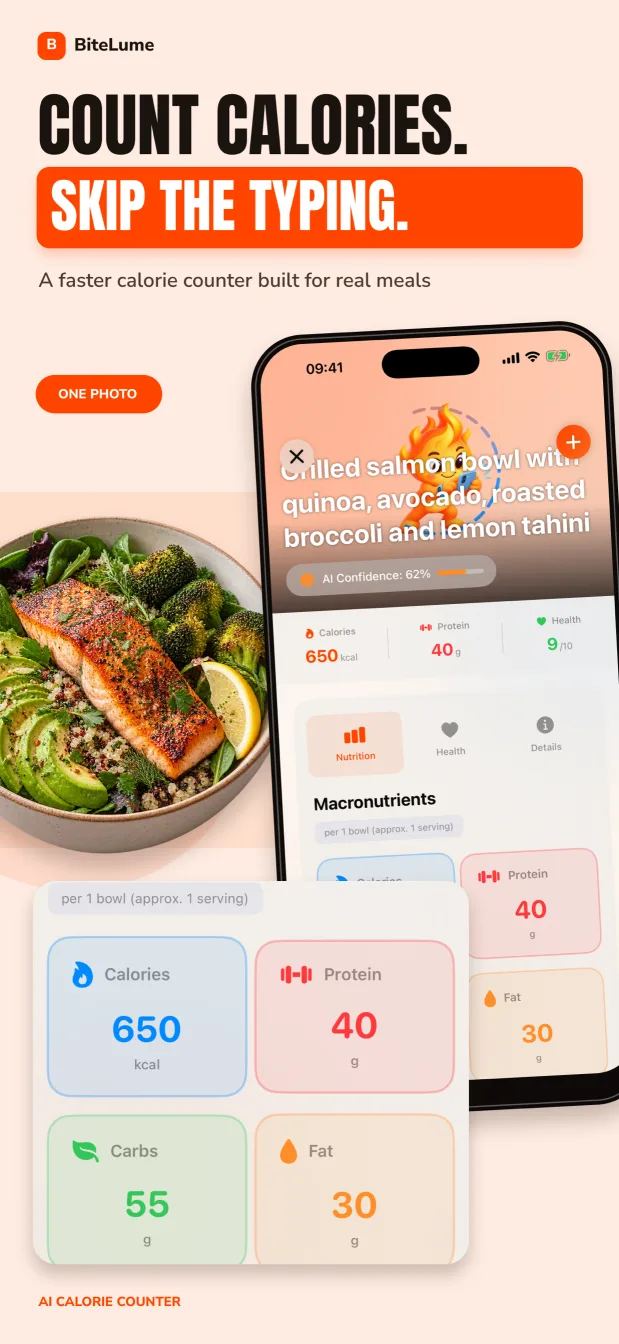
Photograph the prepared breakfast in BiteLume before stirring a bowl or closing a wrap. Review the detected foods, portion assumptions and macros against the labels and quantities you used. For repeated breakfasts, a known recipe portion is stronger evidence than a fresh guess each morning.
The app screenshot below shows the general scan-review workflow, not a nutrition test of these recipes. Use the meal image as a helpful record and keep any actual product or ingredient information that changes the estimate.
Questions people also ask
What can I eat for protein at breakfast without eggs?
Options include strained yogurt, cottage cheese, tofu, beans, fish and poultry, depending on your preferences and dietary needs. Compare actual portions and product labels.
Do these breakfasts all contain the same amount of protein?
No. Their ingredients, quantities and product choices differ. Calculate each recipe using the labels or matching food records for the products you use.
Can the recipes be made dairy-free?
Several are already based on tofu, beans or soy products, but check every ingredient. Dairy-free alternatives can differ substantially in protein and should not be treated as identical substitutions.
Can I track these breakfasts from a photo?
A photo provides a starting estimate. The ingredient amounts and labels offer stronger evidence for known recipes, especially for mixed bowls, oils and hidden fillings.
Track the breakfast you actually make.
Take a BiteLume meal photo and review its macros against your ingredients and recipe portion.