Do not assume every can uses drained nutrition values. Read the serving description and any wording such as drained, as packaged or including liquid. Weigh the part you eat in the same state, then scale the stated nutrition to that portion. If you keep oil, sauce or other energy-containing liquid that the reference excludes, account for it separately without counting it twice.
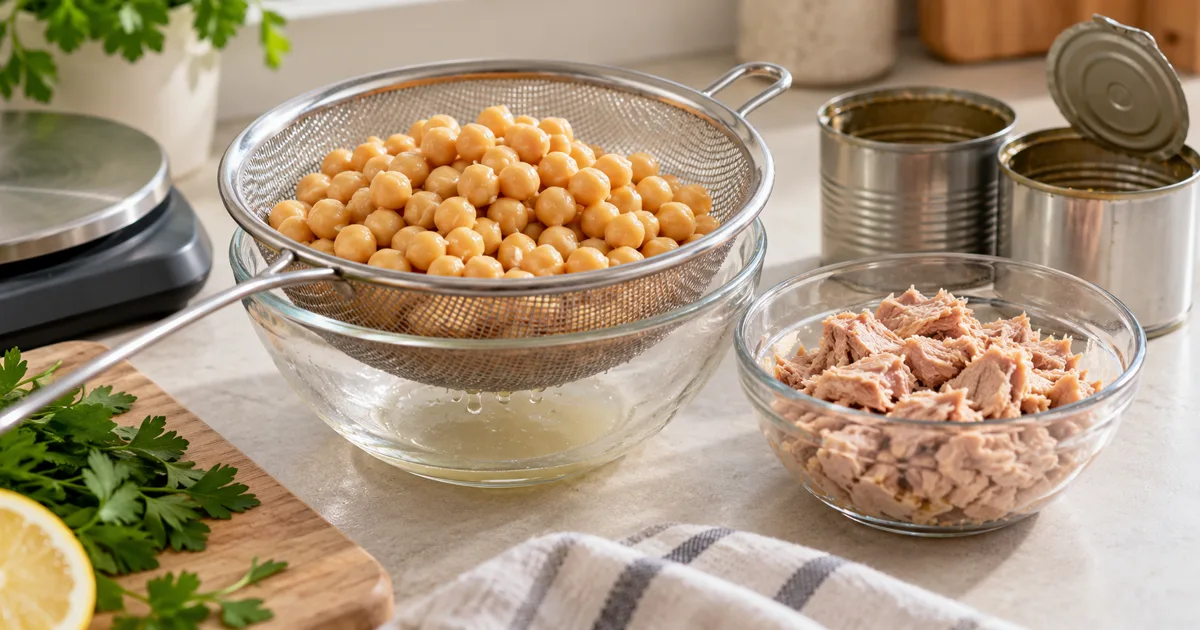
Separate the can, its contents and the drained food
The metal container is not part of the net food weight. Within the food contents, solids and packing liquid may have different roles. A can of beans in water, tuna in oil and beans in sauce should not automatically use the same draining assumption.
Look for the nutrition panel's own serving wording. If the reference explicitly describes drained solids, use the amount of drained solids you eat. If it describes the product including sauce, removing that sauce changes the product you are comparing. Reading the basis first prevents a precise scale measurement from being attached to the wrong number.
Sources for this section: FDA: how to understand and use the Nutrition Facts label
Scale a drained reference to a drained portion
Imagine a hypothetical label stating 120 kcal per 100 grams drained. You weigh 150 grams of drained food into your bowl. The calculation is 150 ÷ 100 × 120 = 180 kcal. The 120 figure is only an illustrative label value; use your product's actual number.
Now suppose you eat 75 grams instead. That is half the weighed portion, so the same example gives 90 kcal. Do not use the total net weight printed on the front as the denominator when the nutrition reference specifies a drained amount.
Swipe to see the full table
| Label basis | What to weigh | Illustrative calculation |
|---|---|---|
| Per 100 g drained | Drained solids eaten | 150 ÷ 100 × 120 = 180 kcal |
| Per stated drained serving | Matching drained portion | Portion ÷ stated serving × stated calories |
| Including sauce | Solids and sauce in the stated mixture | Use the amount of that mixture eaten |
| Unclear wording | Check the manufacturer first | Avoid assuming all cans use the same basis |
Water, brine, oil and sauce need different questions
With water- or brine-packed food, the main calculation problem is often matching drained versus undrained weight. With oil or a substantial sauce, draining can also remove energy-containing material. The amount retained depends on the product and how you drain it; a quick tip of the can does not establish a fixed oil-removal percentage.
If the drained product already has a matching label or database entry, do not add the original packing oil again automatically. If you pour some of the remaining oil into the meal and the chosen reference excludes it, that known addition needs separate consideration. Use what happened in the kitchen, not a universal rule for every can.
When you use only part of the can
Drain the whole can if that is how the reference is defined, then weigh the portion you take. This avoids guessing that one spoonful equals a stated fraction of the front-label net weight. Keep the rest separate before adding mayonnaise, dressing or other ingredients to your portion.
For a mixed recipe, record the drained ingredient amount that actually enters the dish. Once it is included in the recipe total, do not log the same can again as a separate side. If you change the brand or packing medium next time, check the label again instead of assuming the saved recipe remains identical.
Choose a matching database record when the label is missing
Search the full description: the food, packing medium and drained or undrained state. USDA documentation emphasizes that portion weights and descriptions belong to specific records. A generic canned-food name is not enough when the product's preparation changes the reference.
For a real label example, StarKist's U.S. page for its 4.5-ounce Selects Solid Yellowfin Tuna in Water lists a drained 113-gram can as one serving, with 120 kcal. A 56.5-gram drained portion is half that stated serving, or 60 kcal using that label. This product page was checked on November 1, 2026; use your own can's current label, since products and markets vary.
Sources for this section: USDA FoodData Central: edible portions and food descriptions · StarKist Selects Solid Yellowfin Tuna in Water: current label
Use the label alongside the BiteLume meal photo
Photograph the finished meal in BiteLume, then review its ingredients using the can's label and the amount you actually used. A picture of a tuna sandwich or bean salad cannot establish the original packing medium, how thoroughly it was drained or whether oil was retained.
Keep the known product information with your meal review. The photo captures the eating occasion; the label and matching weight provide stronger evidence for a canned ingredient. This is a useful division of effort without pretending either source knows everything.
Questions people also ask
Are canned-food calories always based on drained weight?
No. Read the product's serving description and any drained or as-packaged wording. The stated nutrition basis varies by product and market.
Should I use net weight or drained weight for tuna?
Use the basis named by the tuna label or selected food record. A drained-solids reference should be scaled to the matching drained portion, not automatically to the front-label net weight.
Does draining oil remove all of its calories?
No fixed percentage follows from draining alone. Some oil can remain with the food. Prefer nutrition that matches the prepared product and account for retained or added oil when the reference excludes it.
How do I log half a can of beans?
When the reference specifies drained beans, drain them consistently and weigh the portion you eat. Scale that weight to the stated serving or per-100-gram value.
Keep the label and the meal connected.
Start with a BiteLume photo, then review the canned ingredients using the product and portion you know.