Use the exact package or restaurant nutrition first, and check whether it describes a piece, a roll or the entire tray. For an unlabeled platter, identify each sushi type, count the pieces you ate and account for rice, fillings, sauces and fried additions. Photograph your portion in BiteLume and review the estimate rather than assigning one universal calorie value to every piece.
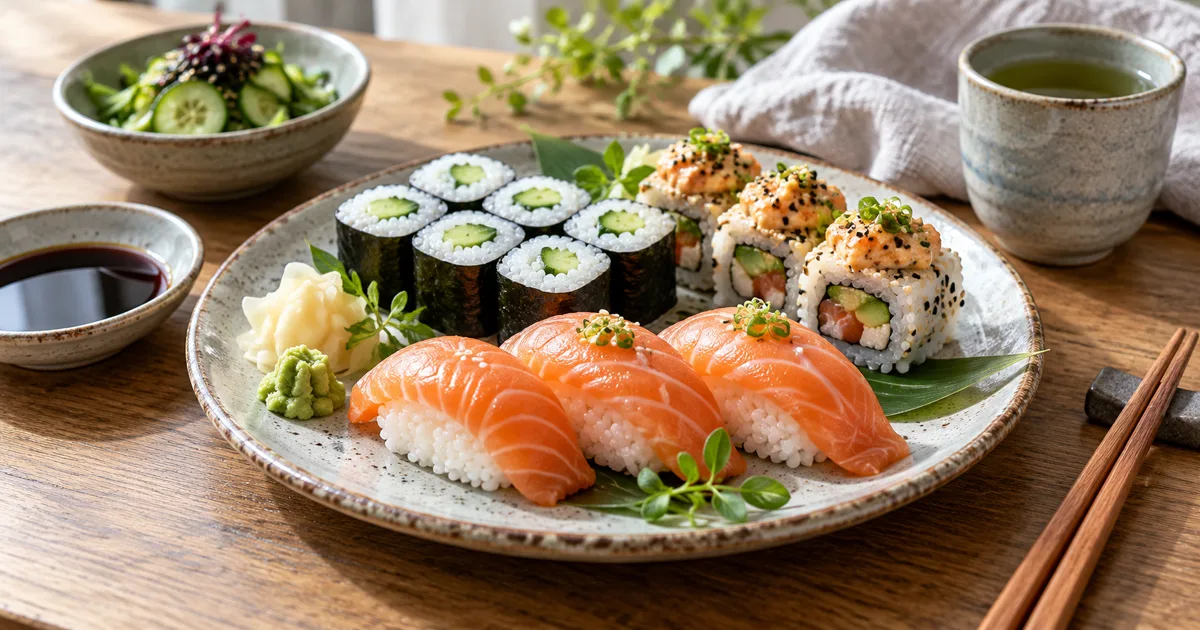
A roll and a piece are different units
A roll can be cut into several pieces, and the number depends on its size and preparation. Nutrition stated for one full roll should not be applied to one cut piece. A packaged tray may contain more than one listed serving even when it looks like a single lunch.
Read the item name and the amount beside the calorie value. If your tray has two servings and you eat all of it, the total is two times the per-serving value. If the label already lists the whole tray, multiplying again would double-count it.
Sources for this section: FDA: how to understand and use the Nutrition Facts label
Separate the sushi types before estimating
Nigiri combines a shaped rice portion with a topping. Maki encloses rice and filling in a roll; some rolls place rice on the outside. Sashimi is sliced fish without the usual rice base. These distinctions matter because the same count of pieces can represent different components and amounts.
A topped or fried roll deserves a separate comparison from a simple cucumber roll. Creamy fillings, batter, mayonnaise-based sauce and sweet glazes may not be obvious from the name. Use the menu or package description to identify them rather than guessing from color alone.
Swipe to see the full table
| What is on the plate | Main portion question | Detail to check |
|---|---|---|
| Nigiri | How much rice and topping per piece? | Size and fish preparation |
| Simple maki | How much of the full roll did you eat? | Rice and filling proportions |
| Topped or fried roll | What recipe and portion does the reference describe? | Sauce, coating and additions |
| Sashimi | What fish and edible amount? | Rice or sides served separately |
| Mixed tray | Which types and quantities are yours? | Per-serving versus per-tray label |
Work through a mixed platter without mixing units
Suppose you have a hypothetical labelled roll containing eight pieces, with 320 kcal for the whole roll. If the pieces are reasonably equal and you eat four, your share is approximately 160 kcal. The number 320 is an example label input, not a nutrition value for sushi generally.
Now add two nigiri pieces using the exact restaurant value or an appropriate portion reference. Add the sauce you actually use if it is not already included. Keep the calculations separate so you can change one assumption without rebuilding the entire meal.
- Identify the full-roll, per-piece or per-tray reference.
- Count the matching portion you ate.
- Estimate each different sushi type separately.
- Include material sauces and sides not already in the reference.
- Adjust for shared pieces and meaningful leftovers.
Do not let visible fish hide the rest of the meal
The fish may be the most recognizable part of a sushi photograph, while the rice accounts for a meaningful portion of the meal. Rice quantity varies, so a fish-only entry is not a substitute for nigiri or a roll. Prepared sushi rice can also differ from a plain cooked-rice reference.
Sauce on top may be visible; sauce mixed into a filling is harder to see. Keep a separate dish in the frame when practical and note whether the sauce was used. Do not automatically add every possible hidden ingredient: include what you know or use a prepared-food match whose recipe is reasonably comparable.
Photograph your share of a shared platter
A photograph of a restaurant platter records what was served to the table, not what one person consumed. Count your pieces as you transfer them to your plate. If your share changes, a second simple photo is more useful than reconstructing the whole order later.
Try to preserve type as well as count. Four small maki pieces and four large topped pieces should not be treated as equivalent merely because both total four. A quick note such as four cucumber maki and two salmon nigiri carries more evidence than six sushi.
Use BiteLume for the visible meal and review the recipe clues
Before eating, photograph the plate with piece boundaries visible and sauces nearby. Review the detected sushi categories and portion assumptions against the menu or package. Where exact matching nutrition exists, use it to evaluate the photo-derived estimate.
A sushi photo cannot reveal the precise rice weight or every ingredient inside a roll. Keep that limit in mind and aim for a repeatable record. The useful outcome is remembering the actual meal and its plausible nutrition, not treating an uncertain estimate as laboratory data.
Questions people also ask
Are sushi calories listed per roll or per piece?
Either is possible. Read the stated serving basis; one roll may contain several cut pieces, and a tray may contain multiple servings.
Can I use one calorie value for every sushi piece?
No. Size, rice amount, filling, fish, toppings and preparation differ. Separate the types or use the exact package or menu information.
Should I count sushi sauce separately?
Count a material amount separately when it is not already included in the chosen reference. Avoid adding a sauce twice when using a complete prepared-roll value.
How do I log sushi from a shared platter?
Record the type and number of pieces you actually ate. A photo of your own plate is more useful than treating the communal platter as your portion.
Keep your sushi portion clear.
Photograph your plate, check the piece counts and review the meal estimate in BiteLume.