
Photograph the complete meal or snack before eating, include drinks and sides, and record anything hidden or added later. Review several days together for repeated timing, meal choices and capture gaps. BiteLume can attach estimated calories and macros to the visual record, but the images and estimates still need your context.
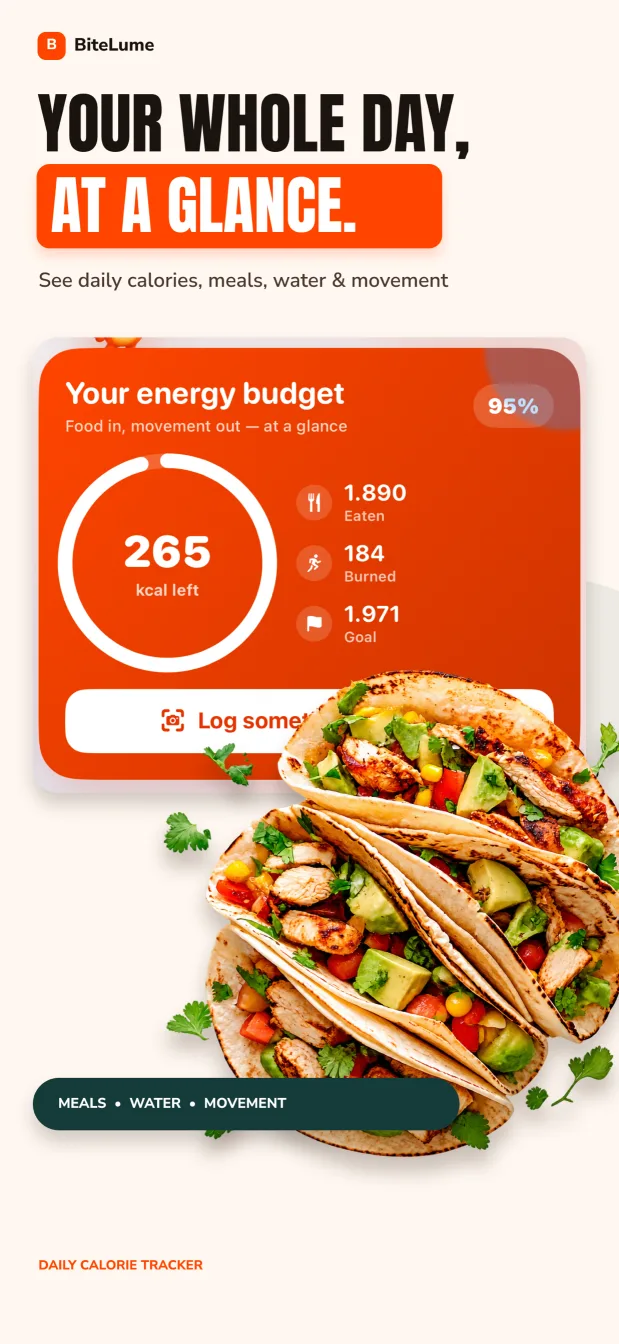
Photo food diary definition
A photo food diary is a time-ordered collection of meal pictures. It is also commonly described as a photo food log, visual food diary or meal-photo journal. The image can prompt memory more effectively than a blank text field: you can see the portion served, side dishes, toppings and the sequence of eating occasions without naming every component before capture.
A useful diary distinguishes the record from the estimate. The photo is a record of what was visible and served. BiteLume's calorie and macro output is an estimate based on recognized foods and portions. What you actually consumed may differ if you took seconds, shared food or left part behind.
Photo-based dietary studies show that camera records can be feasible, but research methods often include trained reviewers or additional information. A consumer diary should retain the same basic lesson: photos add useful evidence, yet interpretation and portion estimation still require context.
Related: Use a weekly photo-food-log review to notice patterns
A photo food diary is not a complete diet history
A photo diary documents the eating occasions you captured. A broader diet history may also consider usual patterns, foods that were not photographed, portion habits, weekdays and weekends, cultural context, supplements and changes over time. One set of pictures cannot answer all of those questions by itself.
The distinction matters when a search for photo diet history is really asking what meal pictures prove. They create a useful visual meal history, not a diagnosis or a complete account of long-term intake. Missing images, hidden ingredients, snacks outside the frame and differences between food served and food eaten can all change the record.
For personal habit review, treat the diary as a memory aid and pattern prompt. For medical nutrition assessment, share the record with a qualified professional and use the method that professional recommends.
A photo shows what entered the frame at one moment. It does not establish everything eaten, the exact recipe or whether the pattern is medically appropriate.
Capture a complete eating occasion
Take the picture before the first bite, when the full serving is visible. Include the plate or bowl edge, and place sides and drinks in the frame when practical. For shared dishes, photograph the portion on your own plate rather than the serving bowl.
Snacks, tastes while cooking, sweetened drinks and second servings are easy to miss because they may not feel like meals. Give them their own quick entry or add a note to the closest meal. If you leave a meaningful portion, adjust the saved amount or take an after photo.
The aim is not photographic perfection. A clear, consistent record is more valuable than a styled image. Use even light and an angle that shows components, then move on with the meal.
- Main plate or bowl, including toppings and condiments.
- Side dishes, desserts and calorie-containing beverages.
- Snacks and samples that occur between meals.
- Second servings or meaningful leftovers.
- A short note for hidden fillings, sauces or recipe details.
Related: Build a food-logging routine that is easier to restart
Add context you will actually use
A diary becomes more informative when it answers a specific question. If you want to understand meal timing, keep capture times consistent. If you want to notice restaurant patterns, mark meals eaten away from home. If hunger or energy matters, use a brief neutral note rather than writing an essay.
Avoid collecting sensitive detail without a purpose. More data is not automatically more insight. Choose one or two context fields, review whether they help, and remove anything that creates work without informing a decision.
Correct nutrition estimates with labels, known recipes and portions when those details are available. For an unknown mixed dish, preserve a reasonable estimate and acknowledge the limitation. The diary should document uncertainty, not hide it.
Swipe to see the full table
| Question | Useful context | Possible pattern |
|---|---|---|
| When do I eat? | Meal time | Long gaps or late snacks |
| Where is tracking missed? | Home, work or restaurant | Incomplete entries in one setting |
| Which meals repeat? | Simple meal label | Reliable routines or limited variety |
| What changes the estimate? | Recipe, label or customization | Recurring hidden additions |
Review patterns once a week
Choose a brief weekly review rather than analyzing every photo immediately. Scan the sequence for missing entries, repeated meals, portion changes and situations where the first estimate needed correction. Ask what the diary shows, not what you expected it to show.
NIDDK guidance on behavior change recommends recording progress to identify strengths, improvement areas and setbacks. Apply that idea neutrally. A week with incomplete photos is information about the workflow; it is not a moral failure. Make the next capture easier instead of trying to reconstruct every forgotten bite.
Nutrition patterns require more than calorie totals. Consider meal regularity, variety and whether the diary represents typical weekdays and weekends. If you have a specific nutrition goal, a registered dietitian can help translate observations into an appropriate plan.
Use the diary to notice repeat situations and make one practical change. A single meal photo is not evidence that you ate well or badly.
Make the habit easy to sustain
Attach the photo to an existing cue: placing the plate on the table, opening a lunch container or making the first drink. Keep the phone accessible and save the entry while recipe and portion details are fresh. If you miss a meal, resume at the next one rather than abandoning the week.
Use the lowest level of detail that answers your question. Some people need only meal photos and times. Others find estimated calories and macros useful after review. The diary should reduce memory burden, not turn every eating occasion into an extended data-entry task.
Research on dietary self-monitoring finds varied methods and evidence, with adherence commonly tied to recording frequency. That supports designing for repetition, but it does not prove that more intensive logging is always better for every person.
Know when tracking is not helping
Pause if the diary increases anxiety, guilt, compulsive checking or avoidance of social meals. People with an eating disorder or a history of disordered eating should seek guidance from a qualified professional before starting or continuing detailed food tracking.
Do not use visual estimates to dose medication or meet a medically prescribed nutrient amount. Clinical needs may require verified labels, weighed portions, specialist tools or a different form of record chosen with your care team.
For general awareness, a photo food diary succeeds when it captures ordinary life honestly and makes patterns easier to see. Completeness, context and a sustainable routine matter more than perfect pictures.
How to use BiteLume for this
- Open BiteLume at each meal or snack and photograph everything you plan to consume.
- Review the detected foods and portions, then add drinks, sauces, tastes or seconds that were off-camera.
- Save the entry while the meal details are fresh, correcting the estimate when you know the label or recipe.
- Use daily, weekly and monthly views to identify repeat patterns without treating one photo or number as a verdict.
Photos cannot reliably reveal hidden oils, dressings, recipe quantities or exact weight. Treat the scan as a starting point and correct what you know.
Questions people also ask
What does photo food diary mean?
A photo food diary is a chronological visual record of meals, snacks and drinks. Each picture preserves what was visible, while notes or reviewed estimates can add information the image could not show.
Is a photo food diary the same as a diet history?
No. A photo diary records captured eating occasions. A complete diet history can consider usual intake, missed foods, portions, context and changes over a longer period. Photos can support that history but do not replace it.
What should I include in a visual food log?
Include the complete plate or bowl, sides, calorie-containing drinks, snacks, toppings and second servings. Add a short note when a filling, sauce, recipe detail or leftover is not clear from the picture.
How often should I review a photo food diary?
A brief weekly review can reveal repeated meal times, foods, contexts and capture gaps without overinterpreting a single photo. Review more or less often according to the question you are trying to answer.
Make the next meal easier to track.
Use a photo to get a calorie and macro starting point, review the details, and keep your progress in one place.
Download on theApp Store