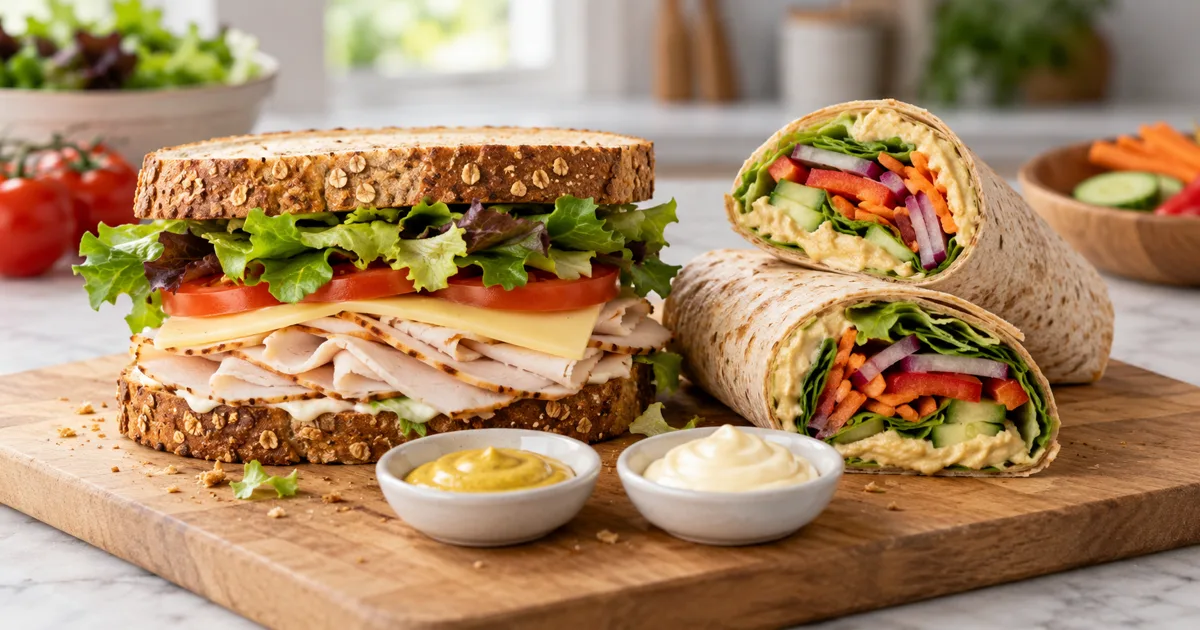
Start with the exact bread or wrap, then add the portion of each filling, cheese, spread and cooking fat. Prefer package labels, your recipe or matching restaurant nutrition. For an unlabeled café sandwich, use the visible filling and a plausible portion range rather than one generic sandwich value. Photograph the cut side in BiteLume and review the hidden extras.
Start with the bread you actually have
Count slices, rolls or wraps before estimating the filling. A thin sliced loaf, a thick bakery slice and a large flatbread are not interchangeable portions. If you have the package, connect its serving size to the amount used; two slices may be one listed serving or two, depending on the product.
For an unlabeled roll, weight is useful if you can match it to an appropriate bread record. Otherwise describe its size honestly and keep the estimate rounded. Toasting does not erase the bread's energy, and a photograph of a closed roll cannot establish its exact weight.
Sources for this section: FDA: how to understand and use the Nutrition Facts label
Related: Choose the strongest evidence for food without a label
Make a short filling inventory
Name the main filling, then look for ingredients that vary independently: cheese, avocado, hummus, mayonnaise, pesto, oil or butter. A chicken sandwich record may already include sauce, so decide whether you are using one complete prepared-food entry or building the sandwich from separate ingredients.
For a homemade lunch, weigh or measure the ingredients as you assemble it. For a café sandwich, the cut side gives better clues than the top view. If you cannot see inside, the menu description and a straightforward question about the spread may improve the estimate more than another photograph.
Swipe to see the full table
| Layer | Useful evidence | Easy mistake |
|---|---|---|
| Bread or wrap | Package serving, weight or clear size description | Selecting a smaller bread entry |
| Main filling | Cooked meat, tuna mix, tofu, beans or hummus amount | Treating a mixed filling as plain meat |
| Cheese and additions | Slice count or a known portion | Counting cheese twice |
| Spread and cooking fat | Measured amount or preparation information | Assuming a dry-looking bread means no spread |
Build a number you can explain
Here is an illustrative calculation using hypothetical label values: bread 180 kcal, chicken portion 120 kcal, cheese 70 kcal, mayonnaise 60 kcal and salad vegetables 15 kcal. Add them once: 180 + 120 + 70 + 60 + 15 = 445 kcal. Those are example inputs, not standard nutrition values for every sandwich.
If you use half the mayonnaise, revise its component to 30 kcal, making the example 415 kcal. If you eat half the entire sandwich and the ingredients are distributed evenly, the corresponding estimate is about half. A half that contains most of the filling is not necessarily half the calories.
A wrap is not automatically a lighter sandwich
A wrap's appearance is a poor guide to its bread amount. Use the actual flatbread label or weight, not the assumption that a thin sheet must contain fewer calories than a roll. Then include fillings that sit beneath the visible salad, such as rice, beans, falafel, cheese or a creamy dressing.
Mixed tuna, chicken salad and egg-free spreads need their recipe or prepared-food identity. A spoonful of tuna mixed with mayonnaise is not the same reference as drained plain tuna. If the recipe is unknown, choose a comparable prepared filling and record the uncertainty instead of silently choosing the lowest result.
Use restaurant nutrition when it matches your order
Published nutrition is useful for a standard item in its stated size. Check whether it includes the bread, default cheese, sauce and sides. If you changed the recipe, identify what changed rather than assuming the displayed value describes every possible customization.
For an independent café with no nutrition information, use a component estimate. Concentrate on bread size, filling quantity and spreads; the difference between two lettuce leaves and three rarely deserves the same effort. This keeps the method usable during an ordinary lunch break.
Photograph the inside, then review the meal in BiteLume
Before eating, turn the cut surface toward the camera or briefly lift the top slice when practical. Keep the whole portion visible, and include side dishes or drinks separately in your review. Do not dismantle a meal simply to produce a perfect image.
Review the detected foods against your inventory. A photo may recognize a sandwich but miss the mayonnaise beneath the filling or confuse a plant-based patty with meat. Use known ingredients and stronger label information to judge the estimate, then save a record that reflects what you ate.
Questions people also ask
How do I count calories in a homemade sandwich?
Add the actual bread, filling, cheese, spreads and cooking fat using matching labels or food records. Use ingredient amounts rather than a generic sandwich entry when you know the recipe.
Are wraps always lower in calories than bread?
No universal rule follows from the shape. Compare the actual wrap and bread portions and the fillings used.
How can I estimate a café sandwich without weighing it?
Use the menu, bread size, visible filling and known spreads to build a rounded component estimate. A photo of the cut side helps preserve the evidence but does not reveal exact weights.
Should I log a sandwich and its ingredients separately?
Choose one complete prepared-food entry or add the components. Logging both the whole sandwich and all its ingredients would double-count the meal.
Start with the sandwich in front of you.
Photograph the filling, review the ingredients and keep your lunch in a BiteLume meal log.