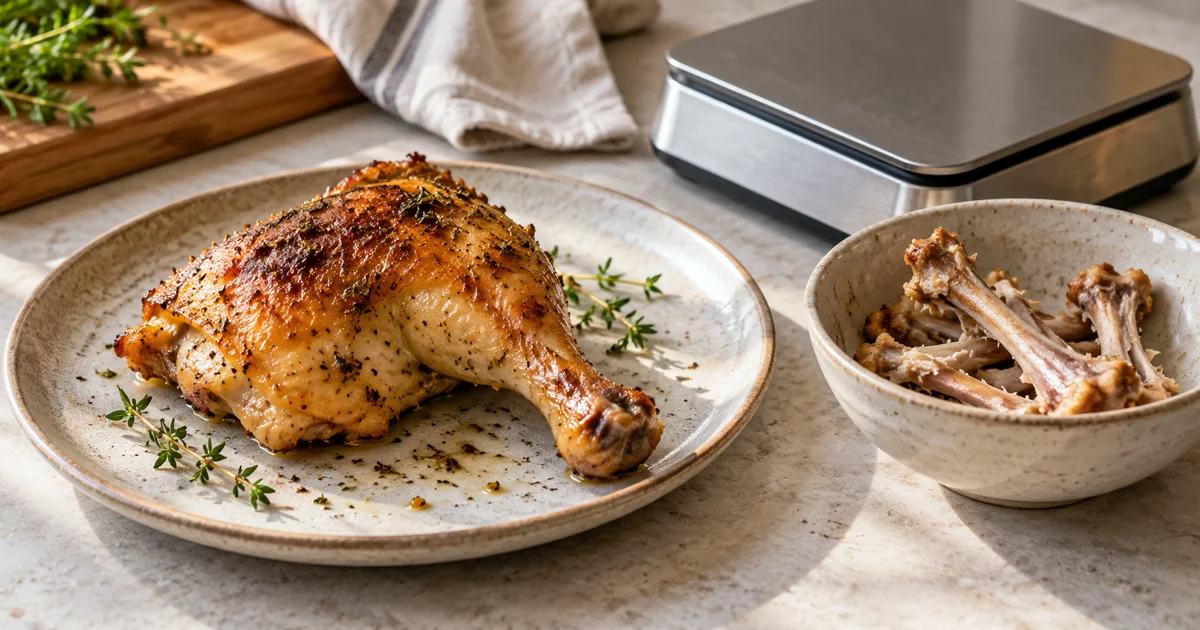
For a database entry stated per 100 grams of edible cooked meat, exclude the bones and any skin you did not eat. The cleanest method is to remove the meat and weigh it directly. Alternatively, compare the cooked portion before eating with everything left afterward, using the same plate and cooking state. Use the exact package instructions when its declared serving basis differs.
Check whether the number describes edible meat
USDA Foundation Foods defines portion weights as edible material without refuse; its examples include a chicken leg without the bone. Packages and restaurant servings can use a different basis, so read the description attached to the value you intend to use.
Look for three details: raw or cooked; meat only or meat and skin; and the amount the value applies to. Roasted thigh meat is a different match from raw chicken breast. A packaged wing serving may also describe a specified number of pieces. Use the stated basis instead of silently converting it to a different one.
Sources for this section: USDA FoodData Central: edible portions and food descriptions
The simplest method: weigh the part you will eat
Put an empty plate on the scale and tare it to zero. Remove the cooked meat from the bone onto that plate. Add the skin only if you plan to eat it and choose a reference that includes skin. This gives you an edible cooked weight without estimating how much the bone contributes.
Keep rice, sauce and vegetables off the weighing plate until you have recorded the chicken. They belong in the meal, but their weight does not belong in a chicken-only calculation. If the chicken has a substantial coating or sauce, use a matching prepared-food record or account for those additions separately.
- Choose a cooked chicken record with the correct cut and skin description.
- Tare a clean plate or bowl.
- Weigh the edible cooked chicken.
- Scale the reference calories to that weight.
- Add sides, sauce or coating that the selected record does not include.
When you prefer to eat the chicken on the bone
You can weigh the cooked portion before eating, then weigh the bones, discarded skin and uneaten meat afterward. Keep the same plate, tare basis and food state. Subtract the comparable leftovers from the starting cooked amount. Do not compare a raw starting weight with cooked bones: cooking can change the weight of the edible portion.
This method becomes less useful if sauce dries onto the plate, bones are moved to another dish or a mixed side is included in only one measurement. In that situation, direct edible weighing or a sensible matched portion estimate is better than a precise-looking subtraction built from inconsistent inputs.
Related: Record the portion you ate, including meaningful leftovers
A worked example with the assumptions visible
Suppose the cooked bone-in portion weighs 180 grams after the plate is tared. After eating, 45 grams of bones and discarded skin remain on the same basis. The estimated amount consumed is 180 − 45 = 135 grams. That subtraction is an example, not a standard yield for every chicken leg.
Now suppose your matching reference lists 200 kcal per 100 grams. This is a hypothetical reference chosen to show the arithmetic, not a universal chicken value. The portion calculation is 135 ÷ 100 × 200 = 270 kcal. Replace 200 with the value for your actual cut and preparation.
Swipe to see the full table
| Step | Illustrative amount | What must match |
|---|---|---|
| Cooked starting portion | 180 g | No plate or side dishes |
| Comparable leftovers | 45 g | Bones, discarded skin and uneaten food |
| Estimated edible amount eaten | 135 g | Cooked state throughout |
| Example reference | 200 kcal per 100 g | Correct cut and skin basis |
| Calculated example | 270 kcal | 135 ÷ 100 × 200 |
Give skin and sauce their own decision
If you eat the skin, do not select meat-only data and assume the difference is already covered. If you leave the skin, include it in the uneaten amount or remove it before direct weighing. The useful distinction is what you consumed, not what arrived on the plate.
For wings and glazed chicken, check whether the food record already includes breading or sauce before adding them again. At a restaurant, a current nutrition value for the exact order can be stronger evidence than a generic chicken entry. Keep uncertainty visible when the coating recipe or portion is unknown.
Use a meal photo to keep the weight in context
Photograph the full meal in BiteLume before eating. Review the recognized cut, preparation and portion alongside the edible weight you measured. The photograph helps preserve the sides, glaze and skin decision that a scale number alone can miss.
A camera does not weigh the bone or separate edible tissue inside the image. Use the scale as the stronger evidence for weight, and treat the photo estimate as a starting point to review. Once the meal is recorded, move on; repeating scans until a preferred number appears does not improve the measurement.
Questions people also ask
Do chicken calorie values include the bones?
USDA Foundation Foods portions describe edible material without refuse. Other labels may use a specific serving basis, so check the exact record or package rather than assuming all chicken values include or exclude bones in the same way.
Should I weigh chicken before or after removing the bone?
For an edible cooked-meat reference, removing the bone and weighing the edible portion directly is usually the clearest approach. Match the cooking state and whether skin is included.
Can I subtract the bones after eating?
Yes, as an estimate, when the starting and leftover measurements use the same cooked state, plate basis and food components. Include uneaten skin and meat in the leftovers rather than subtracting bones alone.
Can BiteLume identify the weight of chicken bones from a photo?
A meal photo does not measure bone weight. Use a known edible weight or a transparent portion estimate when reviewing the scan.
Make the chicken portion easier to review.
Capture the plate in BiteLume, then check the estimate against the edible portion you measured.